
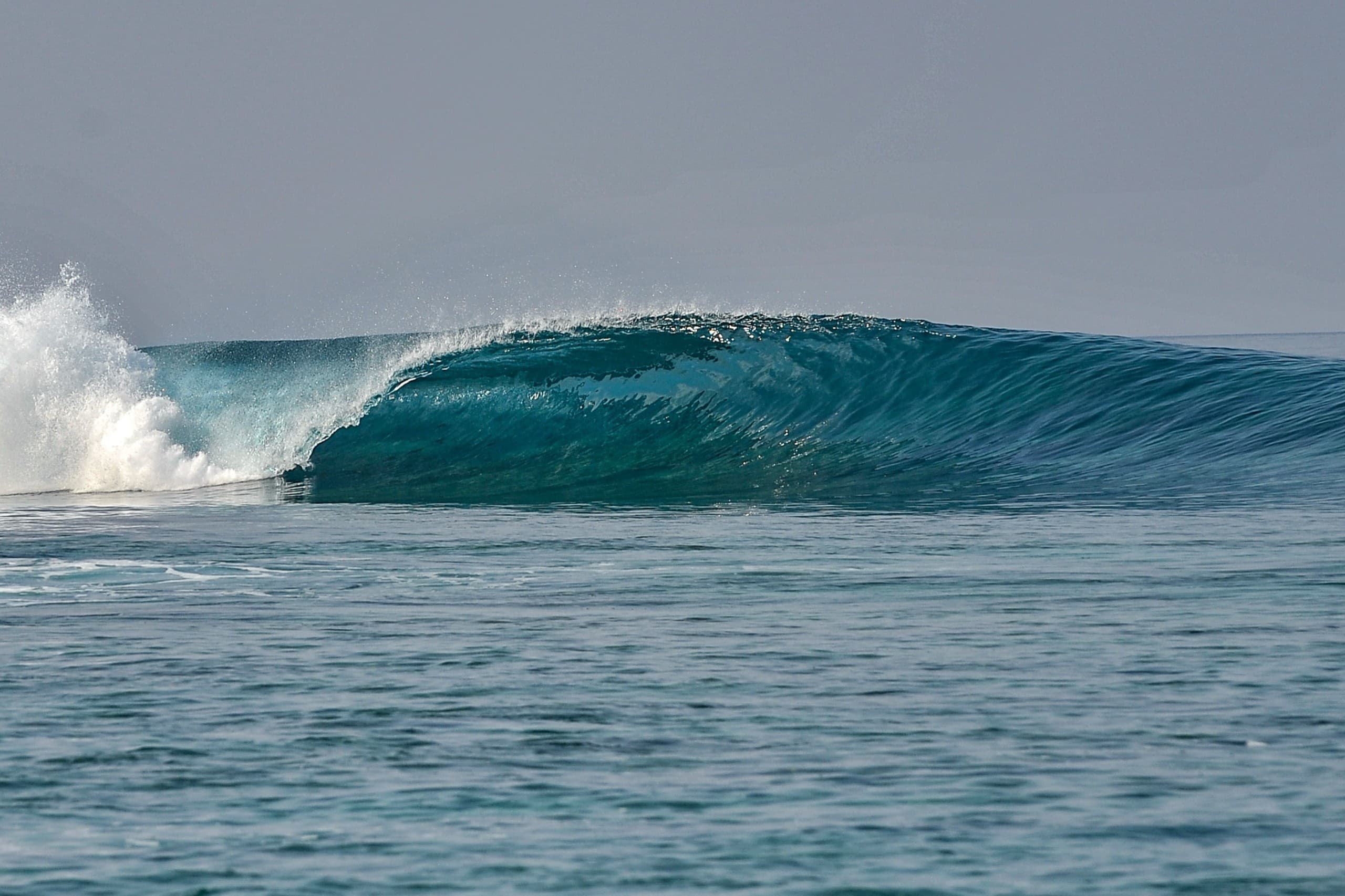
SURF IN MALDIVES
We know where to go.
Surf Charters
Decades of Wave Hunting
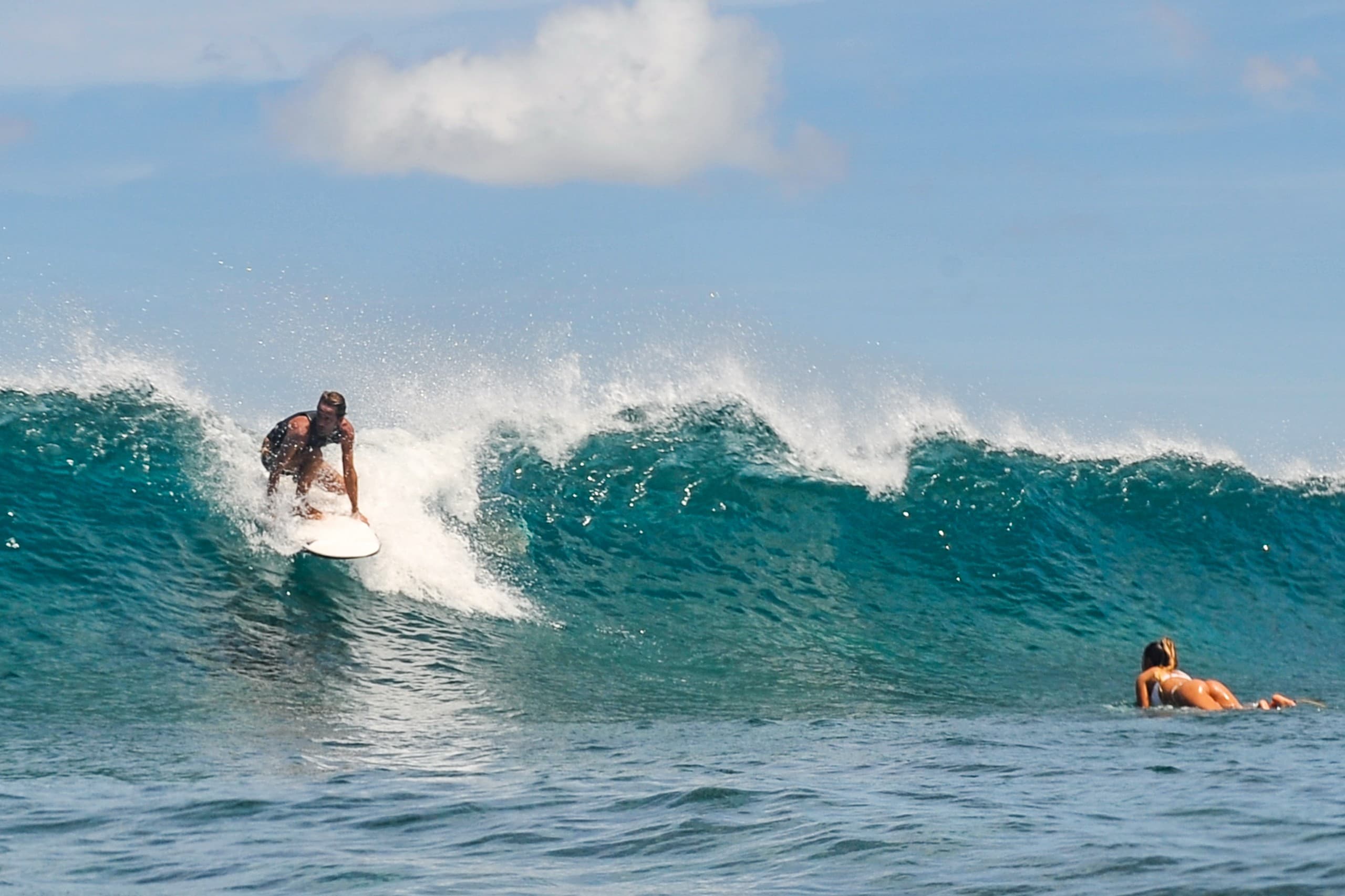
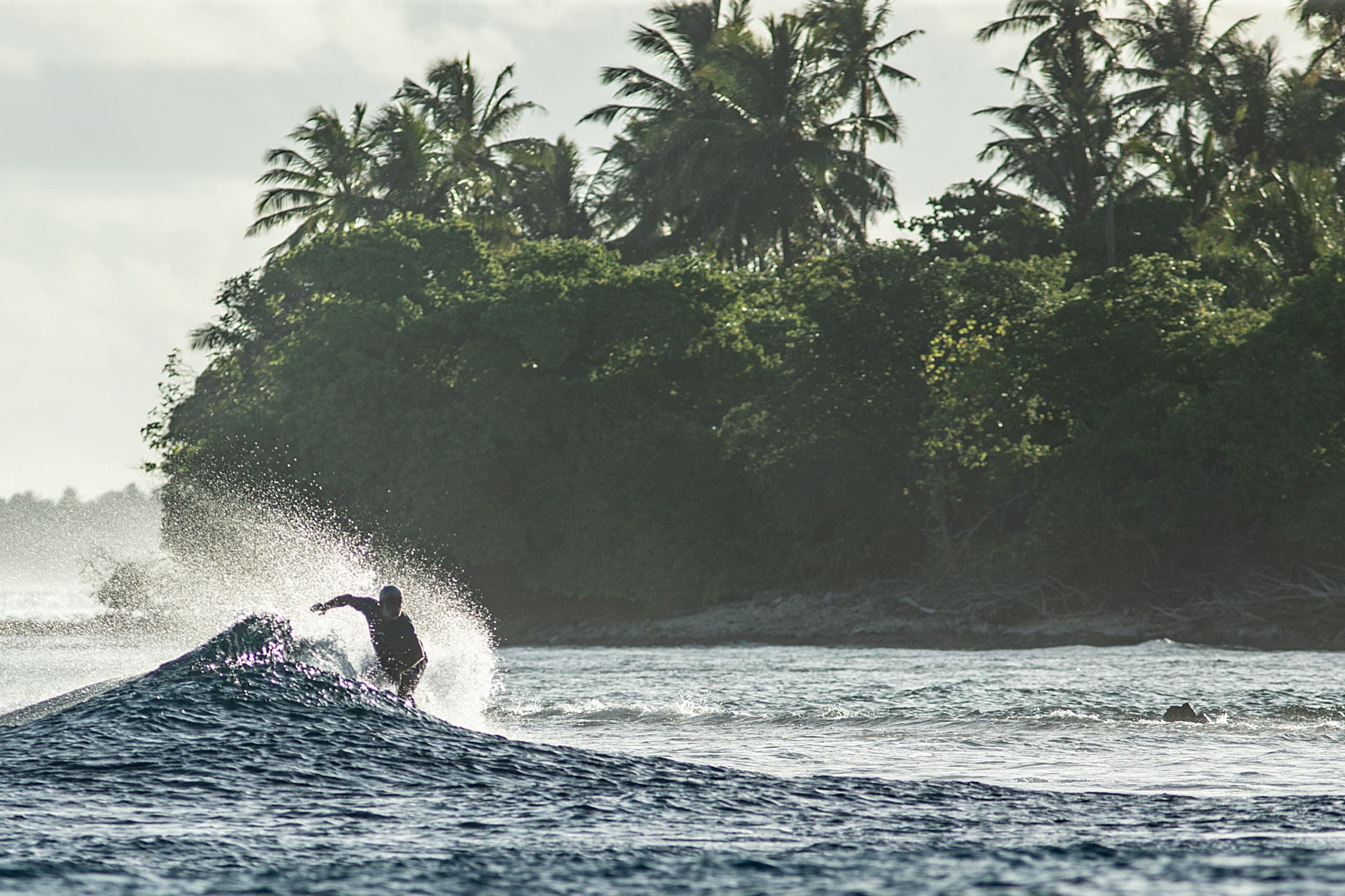
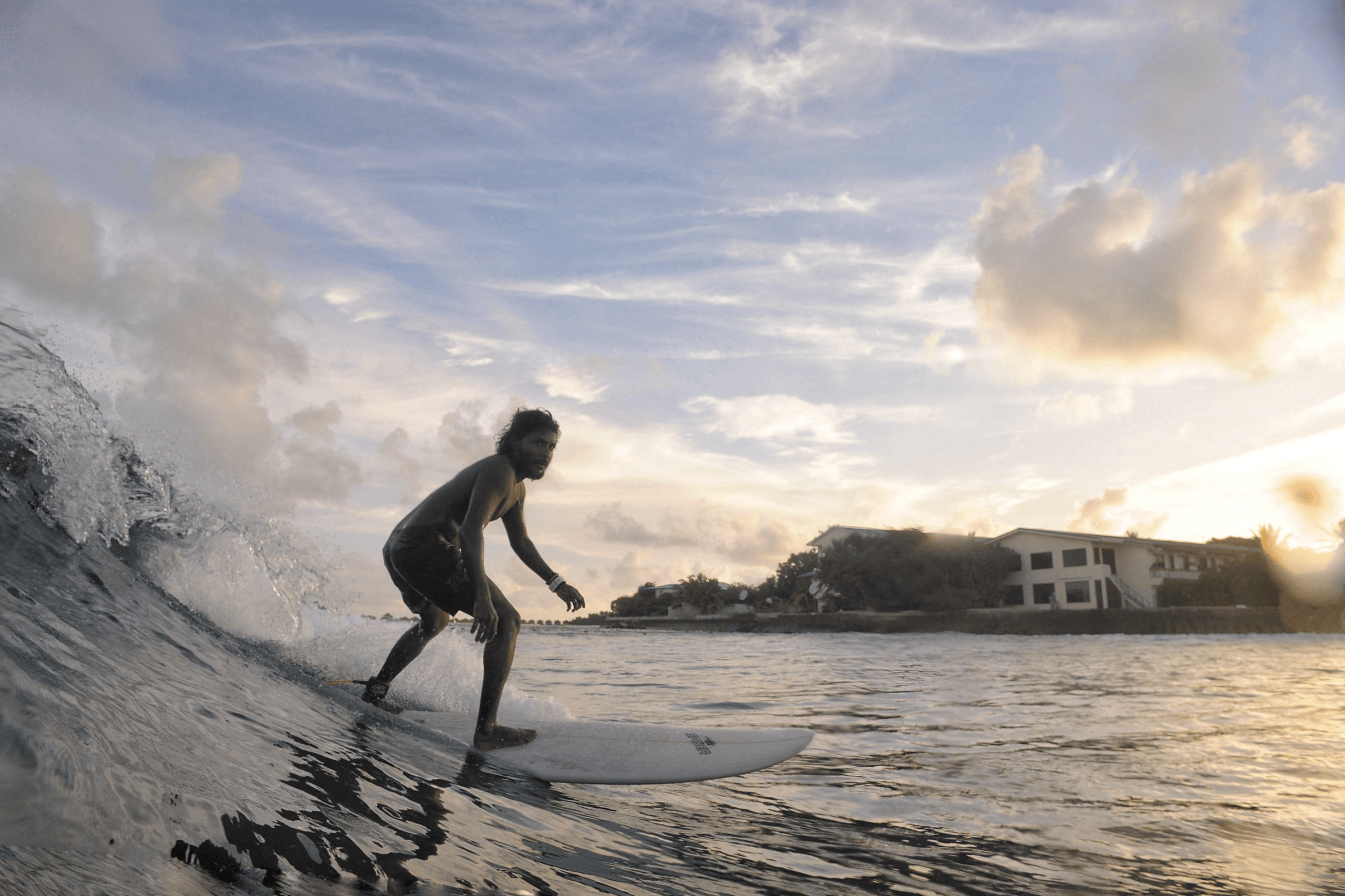
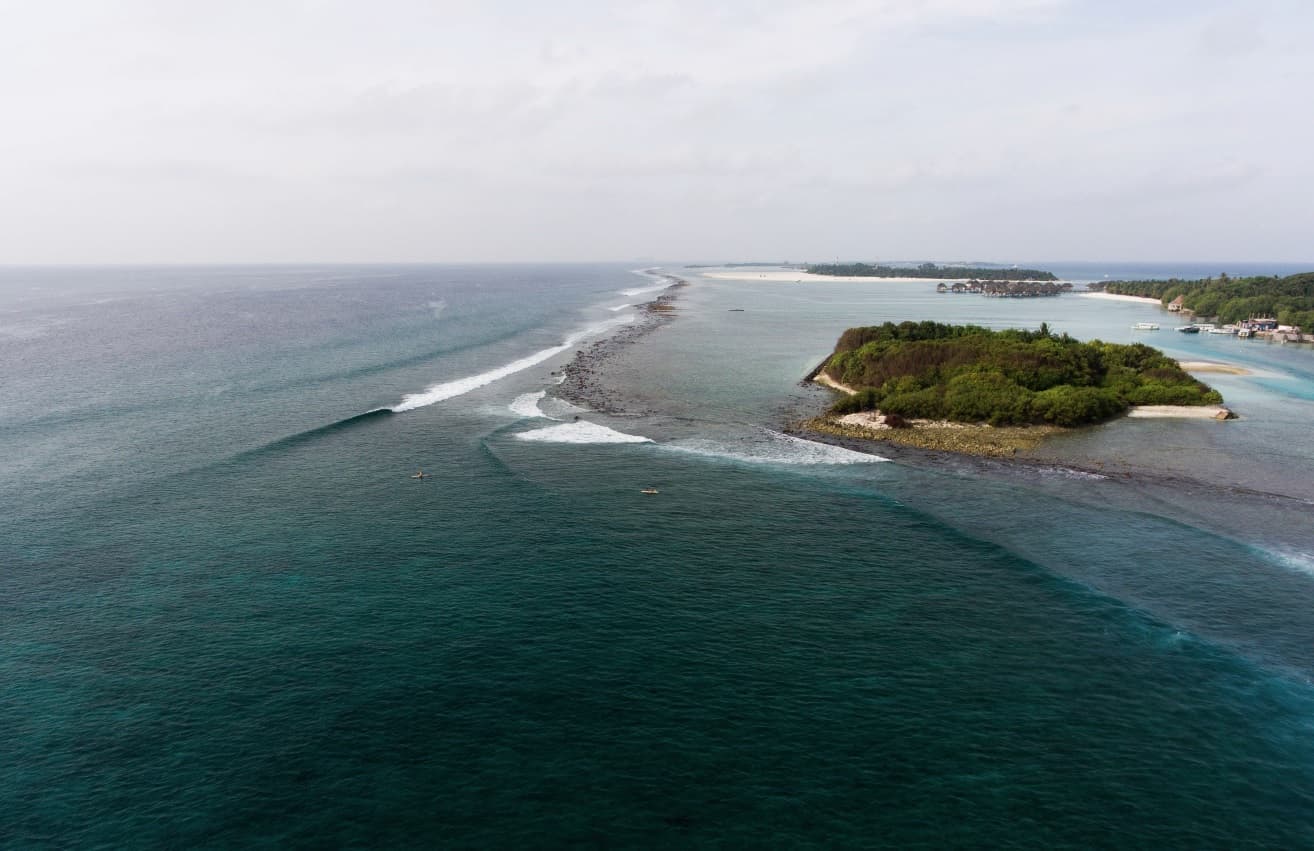
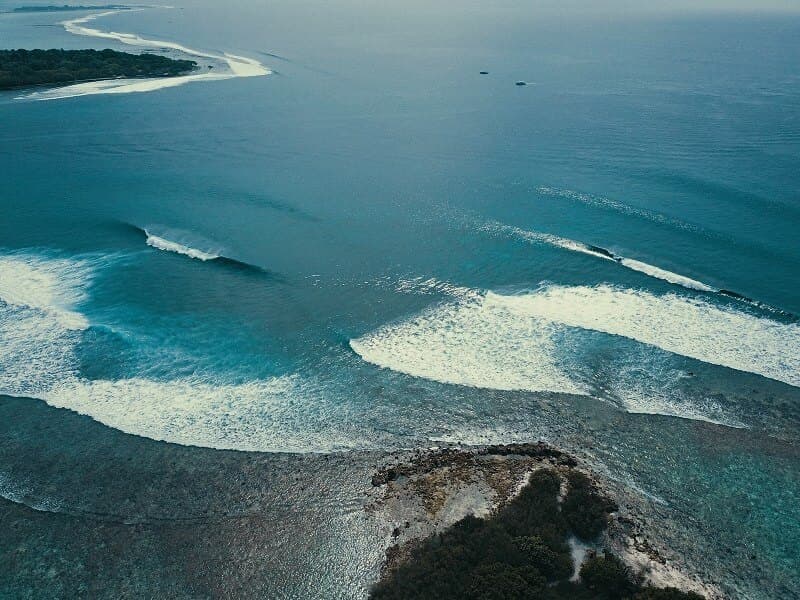
The Maldives is not a single surf destination — it's a system. Nearly 1,200 kilometres of atolls, thousands of reef passes, two monsoons, two separate swell engines running from the Southern Ocean and the Southeast trades. Every atoll faces a different direction. Every pass has its own geometry, its own tide behaviour, its own mood.
We have been reading this system for decades — not from a resort schedule, not from a day-boat itinerary, but from the water itself. From anchoring in the dark and being in the lineup before anyone else. From the passes that don't appear on any map yet, and the ones we're still trying to understand.
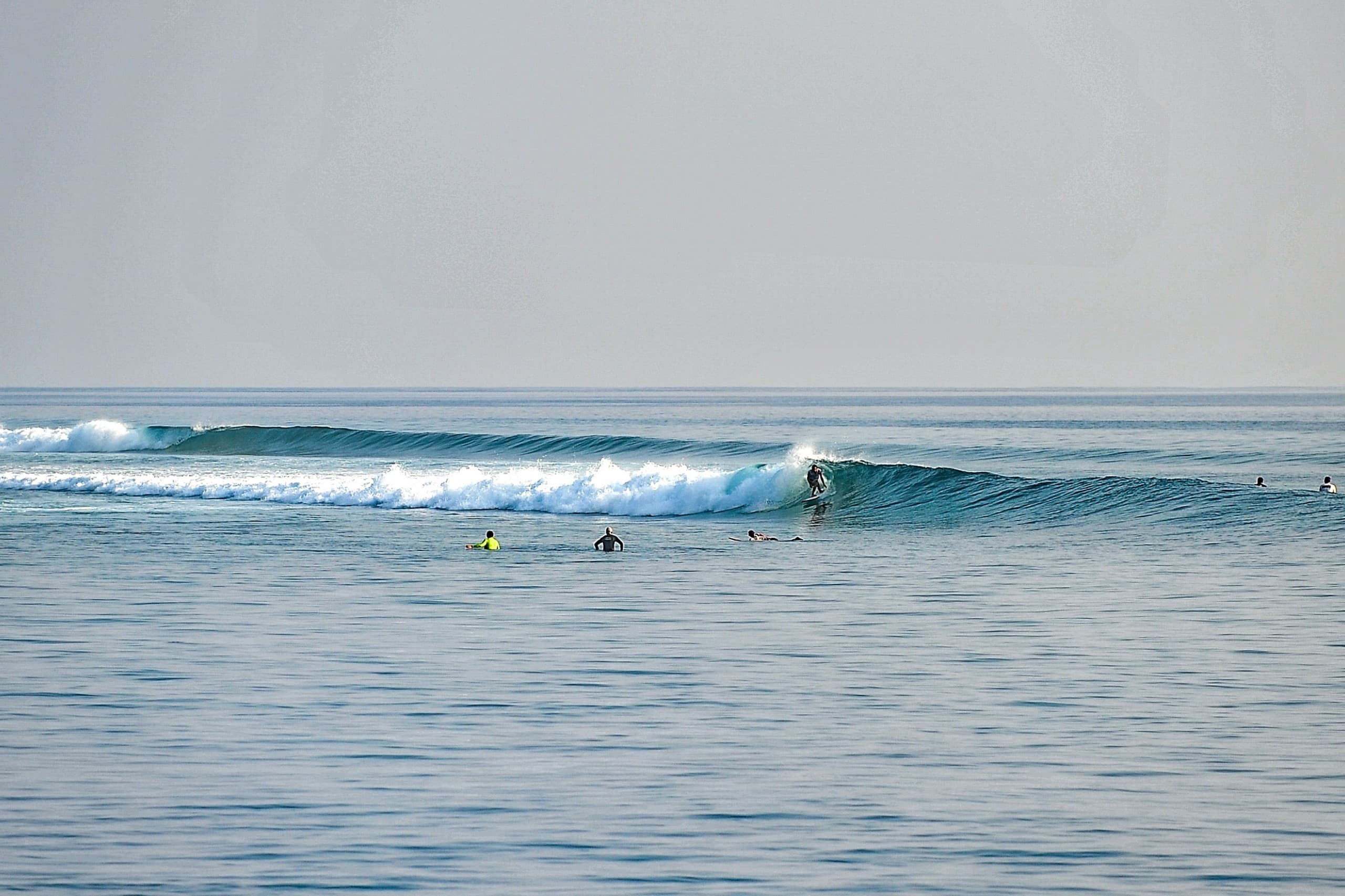
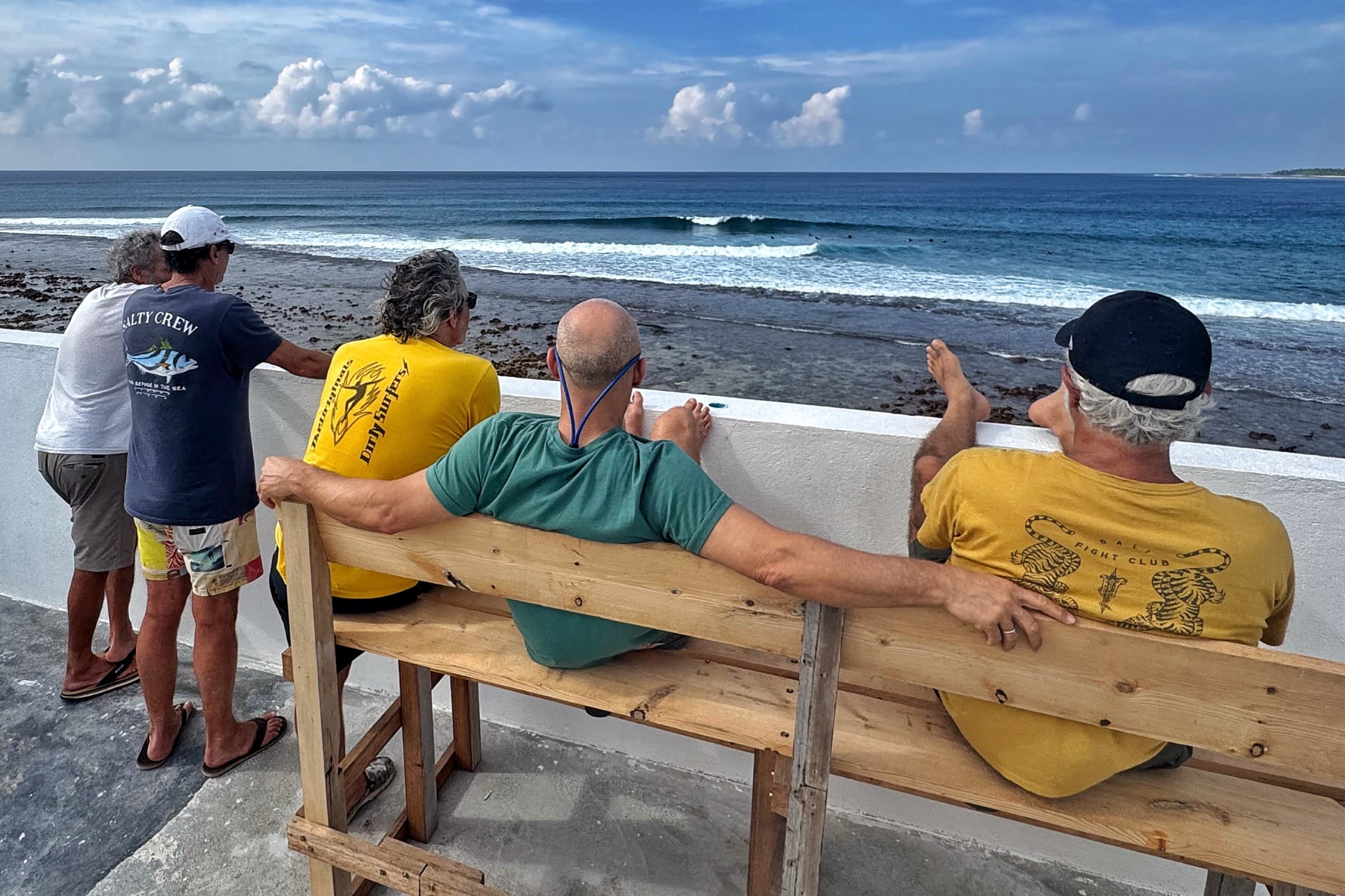
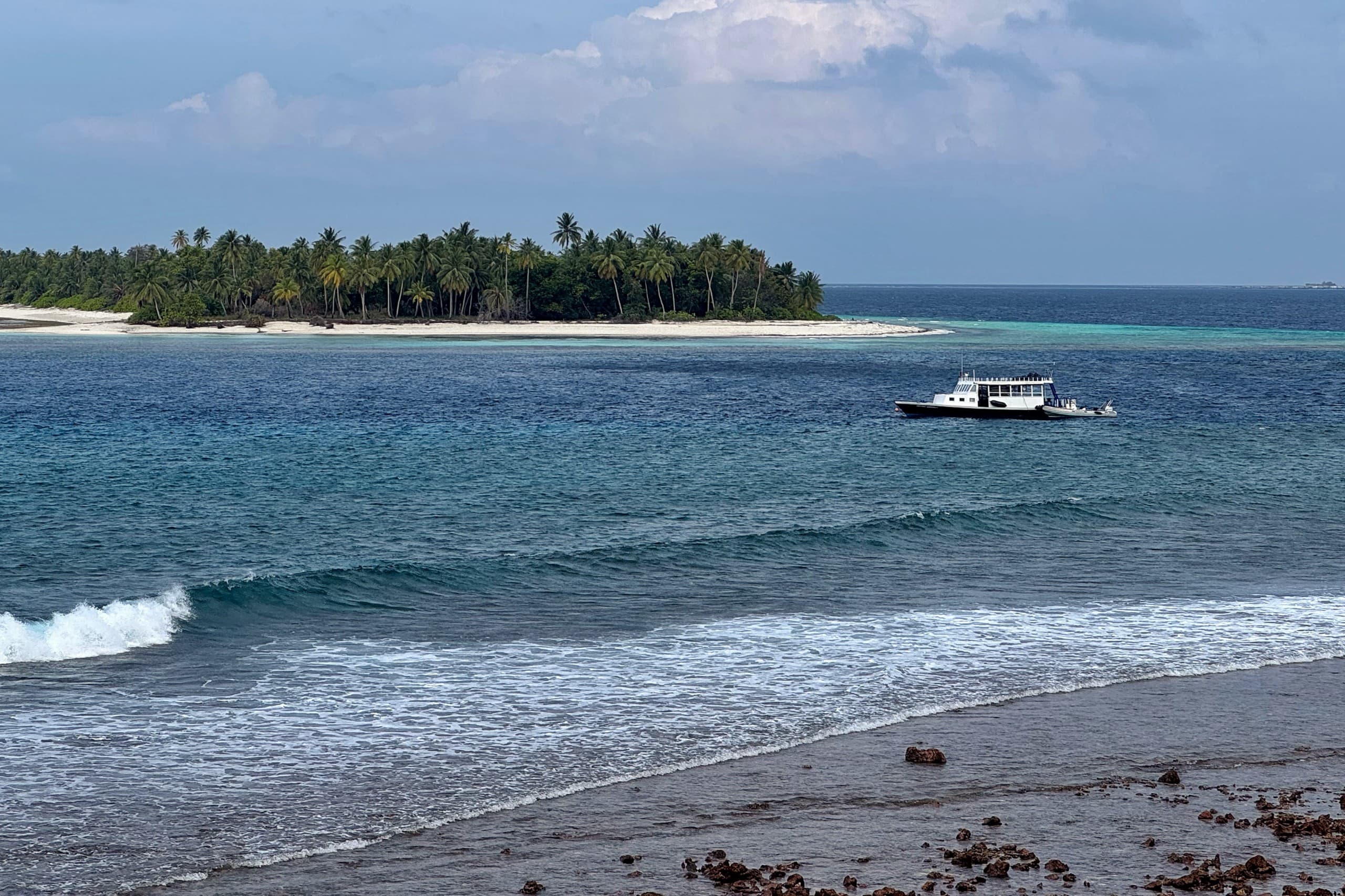
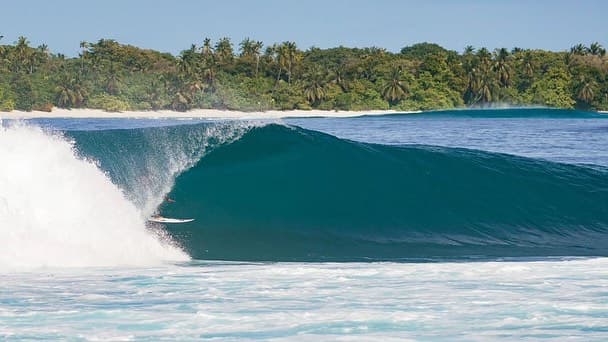
Maavahi is a surf charter, yes. But more than that it's a floating base for anyone who takes the ocean seriously — from the reef breaks of North Malé — Sultans, Cokes, Chickens, Jailbreaks and the rest of the gang — to the powerful passes of the Southern Atolls, and further still into waters that don't appear on any surf map yet. Everything we know about these waters we're slowly mapping over at SurfinMaldives — the most complete atlas of Maldivian surf ever attempted, still being written.
Surf Intelligence
The Maavahi Liveaboard Surf Charter. Captain's Log
What we've learned from decades in these waters — and everything you need to plan your expedition.
1. How the Maldives Receives Waves
Two completely separate energy systems feed the Maldives. Understanding the difference is the difference between a good trip and a great one.
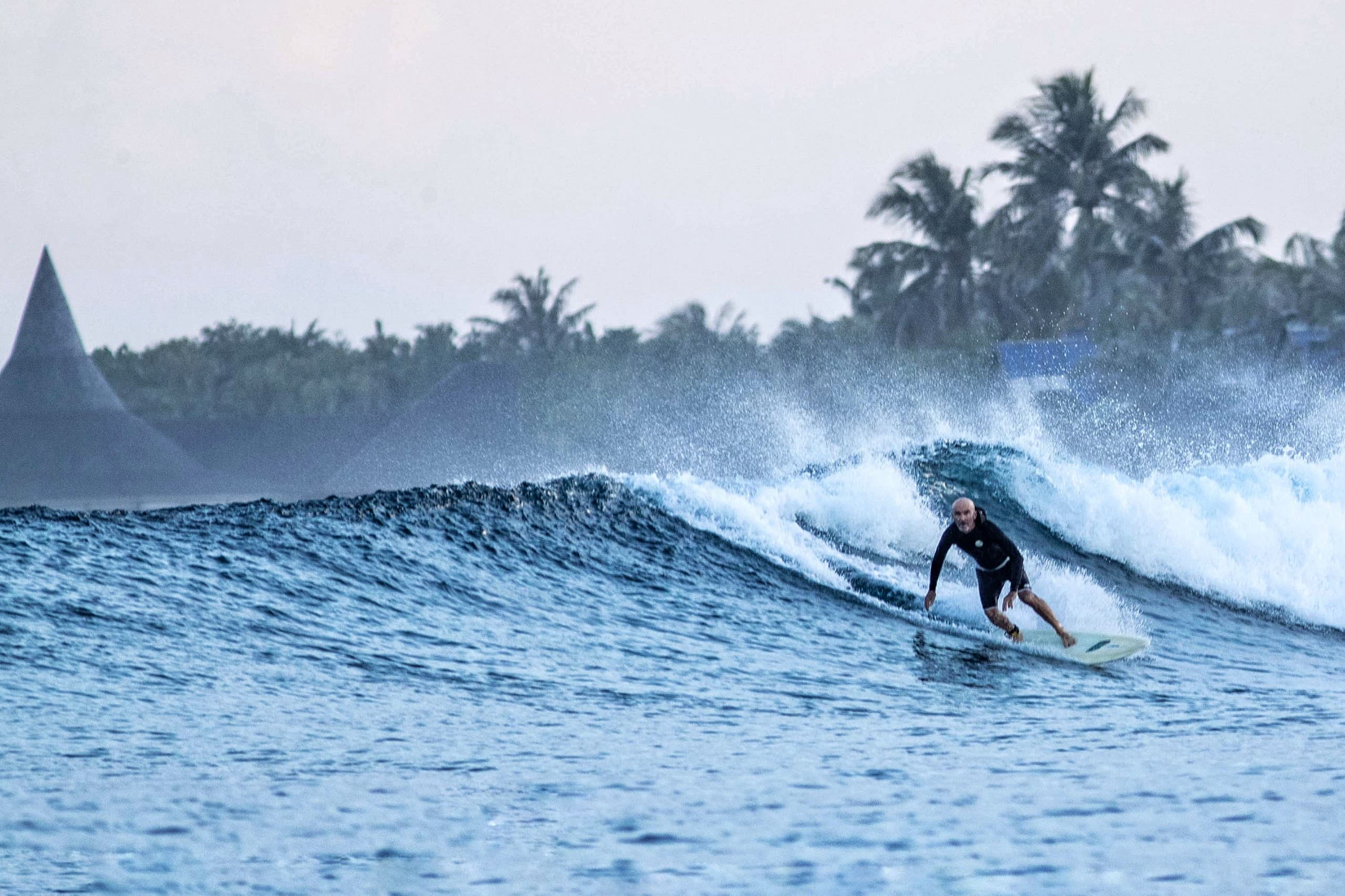
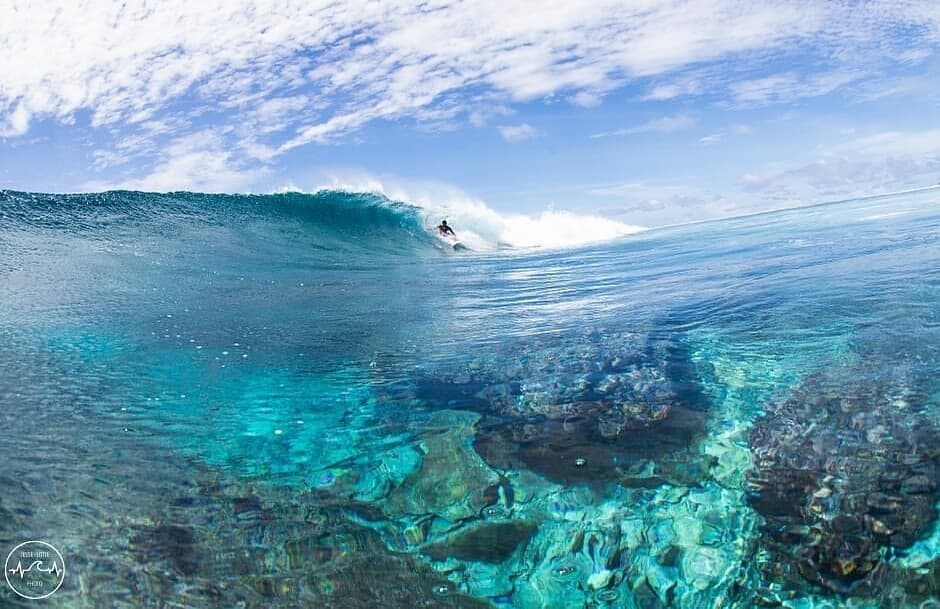
The first engine is the Southern Ocean — the Roaring Forties, roughly 40–60° South, where deep low-pressure systems track eastward across thousands of kilometres of open water and generate long-period groundswell of 14 to 20+ seconds. This energy travels the entire width of the Indian Ocean, arriving at the atolls as organised, clean SW to SSW swell — the same pulse that lights up Bali and the Mentawais. When a significant Southern Ocean low fires between April and October, the sets that reach the outer passes are overhead to double-overhead, with the kind of interval that lets you breathe between them.
The second engine is the Southeast Trade Wind swell — shorter period (10–14 seconds), more consistent, running from April through October. Think of it as the rhythm between the big Southern Ocean pulses. When the Roaring Forties rest, the SE trade swell keeps the lineups waist-to-head high.
Monsoons control the wind. And wind direction decides which face of each atoll is offshore and which is blown out. During the Southwest Monsoon (Hulhangu, May–October), the prevailing W-SW winds make east and southeast-facing passes the priority. During the Northeast Monsoon (Iruvai, December–April), the wind flips and west-facing reefs get their window. The captain moves the boat accordingly.
One more thing worth knowing: the Maldives is full of surprises. Unusual swell angles, refracted energy wrapping into unexpected passes, spots that fire once a season under very specific conditions. Part of what we do is stay curious.
Open Ocean
We check the forecasts before we move the boat. Not once a day — continuously. If you want to follow along during the trip, these are worth having on your phone: Surfline → Windguru → Surf-Forecast →
2. Routes, Seasons & The Art of the Unexpected
The classic surf calendar runs from April to October, when the Southwest Monsoon delivers consistent Southern Ocean groundswell and SE trade wind swell to the east-facing passes of the North and South Malé Atolls. Sultans, Cokes, Chickens, Jailbreaks — these are waves that earned their reputation honestly, and if you haven't surfed them yet, they belong on your list.
The Central Atolls — Laamu, Thaa, Meemu — sit deeper in the chain and receive direct Southern Ocean swell with less atoll shadowing. More isolated, more consistent at size, and significantly less crowded. Getting there requires a 24-hour crossing. That crossing is one of the reasons they stay empty.
The Southern Atolls — Huvadhoo, Fuvahmulah, Addu — are the shoulder season magnets. March–April and October–November, when the swell angle shifts and the northern atolls go quiet, these spots come alive. Huvadhoo in particular catches swells that the entire northern chain misses entirely.
Then there's everything else. Nearly 1,200 kilometres of atoll chain, thousands of reef passes, and a map that is still mostly blank. The Northern Atolls — Raa, Baa, Noonu, Haa Alifu — hide breaks that rarely see a board, on reefs that don't have names yet. We're exploring them, slowly and honestly, over at SurfinMaldives — an atlas of Maldivian surf still being written. Some of what we find there finds its way into Maavahi's routing.
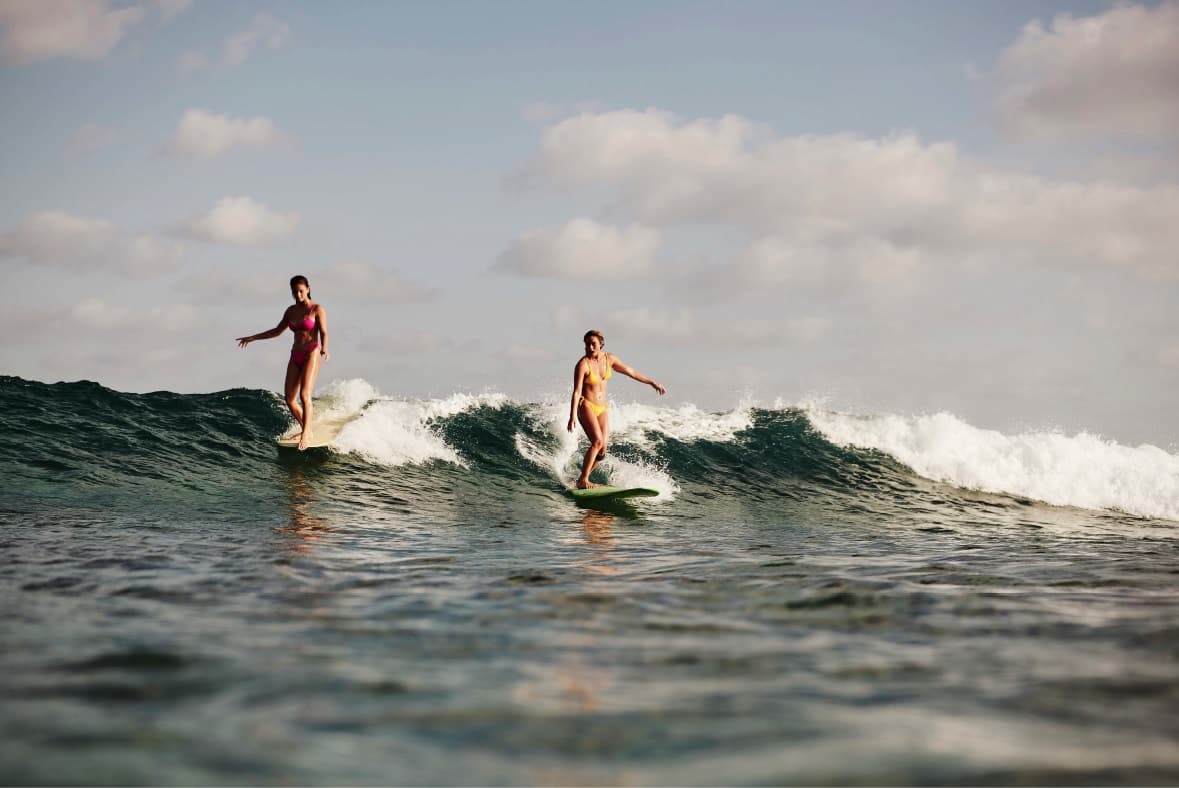
Not every trip needs to be a swell chase. Some of our favourite expeditions have been slower — a week between atolls, fun waves in the morning, a deserted sandbank in the afternoon. Soul surfers who care more about empty reefs and good company than chasing the heaviest slab on the chart. A sunset walk through a fishing village. A massage that wasn't on the itinerary. We organise those trips with the same care as the barrel hunts. Tell us what you're after.
Atoll Intelligence
Every route we run is also a reconnaissance mission. Every unusual swell event, every unexpected pass that fires — we log it. That accumulated knowledge is part of what you're booking when you book Maavahi. SurfinMaldives →
3. Gear: What to Bring, What to Leave at Home
Boards: Three shapes cover the full range of Maldivian conditions. An all-around shortboard for standard reef pass days — something you're comfortable on in head-high to overhead surf. A more cruisy shape — fish, mid-length, or soft-railing performance board — for the point breaks and mellow reef setups where trim and flow beat vertical attack. And if you're chasing serious barrels, a step-up: something with more volume in the rail and a narrower tail that holds in at speed.
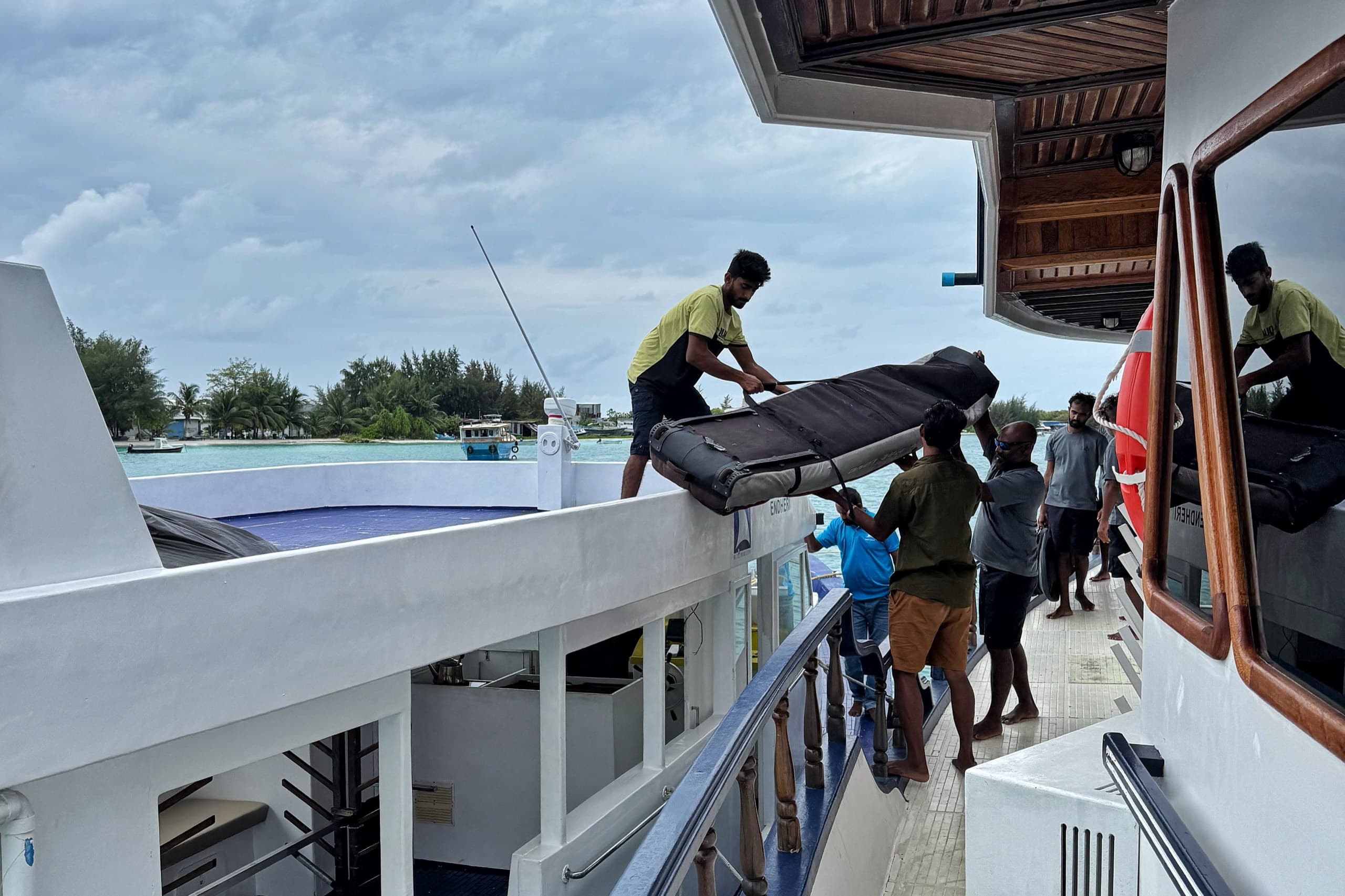
Longboards and SUPs are a different conversation. Getting them on a plane nowadays has become genuinely difficult — excess baggage fees, airline restrictions, handling damage. Leave them at home. Our rental fleet covers both, with premium brand equipment that won't embarrass you in the lineup. Foamies for beginners, proper performance shapes for everyone else — whether you want to travel light or test new shapes. Check the full rental selection →
Ding repair: The crew carries both instant repair resin for quick fixes between sessions and traditional resin for more serious work. A reef kiss on day one doesn't have to mean a dead board for the week. For structural repairs beyond what we can do on board, our Surf Shop handles it — and can deliver anywhere in our speed boat and ferry network, to Maavahi directly, or to any resort, airport, or land camp on the route.
The Shop: Whether you need a replacement leash, fresh wax, a new set of fins, or a board you want to keep — the Surf Shop carries premium brands across the full range. Not the rental shack at the end of the pier. A proper shop, with proper equipment, that happens to operate in the middle of the Indian Ocean.
Wetsuit? The Indian Ocean sits at 28°C year-round — leave the rubber at home. A rash guard or surf tee is the minimum, for sun and reef protection. If you run cold, a light vest or jacket is worth packing for the dawn patrol dhoni ride and the evening crossings. At 5:30am with spray and a bit of wind, you'll be glad you have it.
Reef booties — yes or no? Controversial topic in any lineup. The Maldivian crew walks barefoot on reef they've known since childhood and wouldn't know what to do with a bootie. Fair enough. But if you're exiting a shallow pass, scrambling back onto the dhoni over live coral, or doing a beach entry on an island with sea urchins — a pair of flexible reef booties earns its place in your bag. The foldable kind fit in a boardshorts pocket and come out exactly when you need them. A bad urchin encounter or a deep coral scrape in warm tropical water can keep you out of the ocean for days. Your call — but pack them and decide on the day.
Crew Notes
Fins are the most underrated thing to pack extras of. Reef contact happens — a lost or cracked fin on day two is an annoying way to lose water time. Pack at least one spare set. And if you run out, the Shop carries a full range of FCS and Future fins with delivery anywhere on the route. Oh — and a board sock on the dhoni. Equatorial sun, heat and wax don't mix well, and your board will thank you for every ding you didn't give it. Surf Shop & Rental →
4. Intermediate or Expert? The Honest Answer
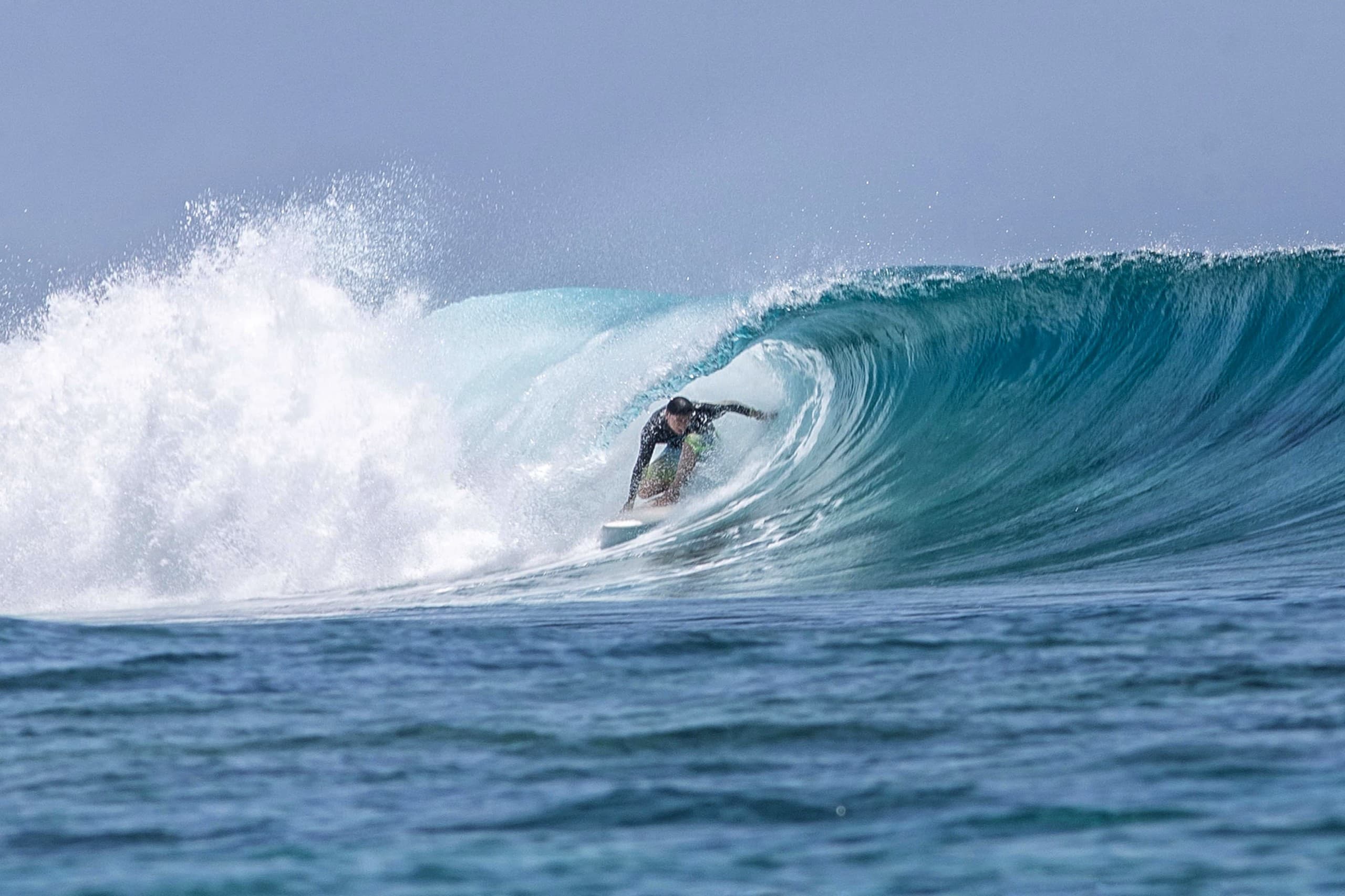
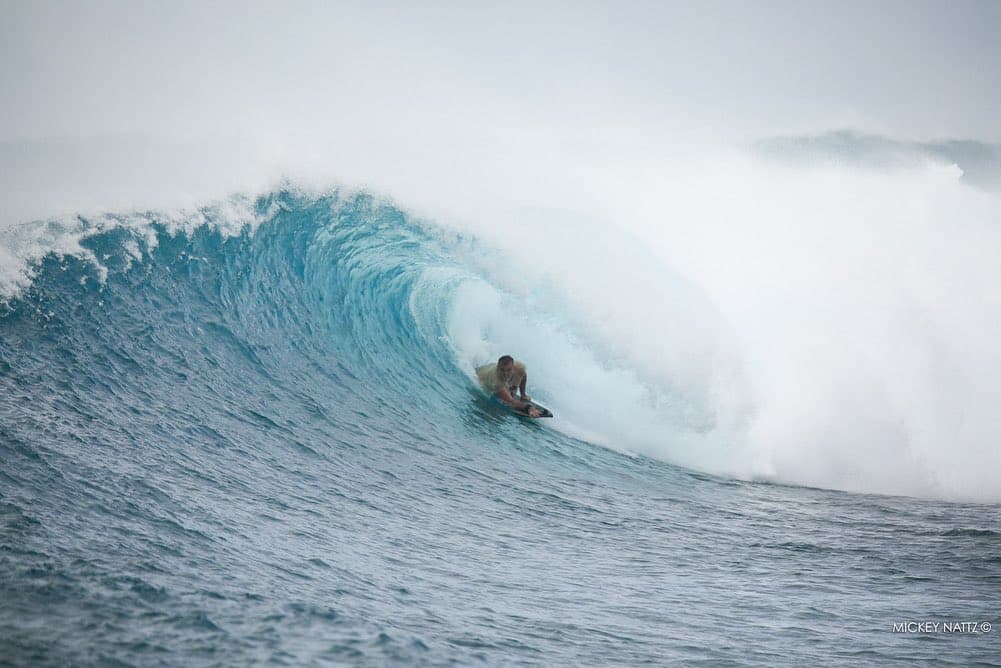
The Maldives has a reputation for consequence — shallow reef, fast barrels, serious hold-downs. That reputation is earned. Cokes at 6 foot on a low tide incoming is not a wave for someone who is still working on their bottom turn. Beacons at size has ended trips early.
But the Maldives is also an atoll system, which means if you're not in the superhero mood, geography does a lot of the filtering for you. On any given day, within a few miles of the heavy water, there are passes with deeper channels, softer lips, and more forgiving exits.
The counterintuitive part: big swell days are not automatically closed to intermediates. When Southern Ocean groundswell pushes serious size into the outer passes, energy also wraps into interior breaks and deeper channels that don't exist on a small day. Some of the most fun intermediate sessions happen on the days the experts are going double-overhead on the outside. You just need a captain who knows where to look.
Worth Knowing
Surfing in the Maldives is for everyone — the more we know about your group when you enquire, the better. Levels, expectations, whether everyone is chasing the same thing or not. There's no wrong answer. It just helps us put together a routing where nobody ends up frustrated and everybody goes home happy.
5. The Liveaboard Advantage
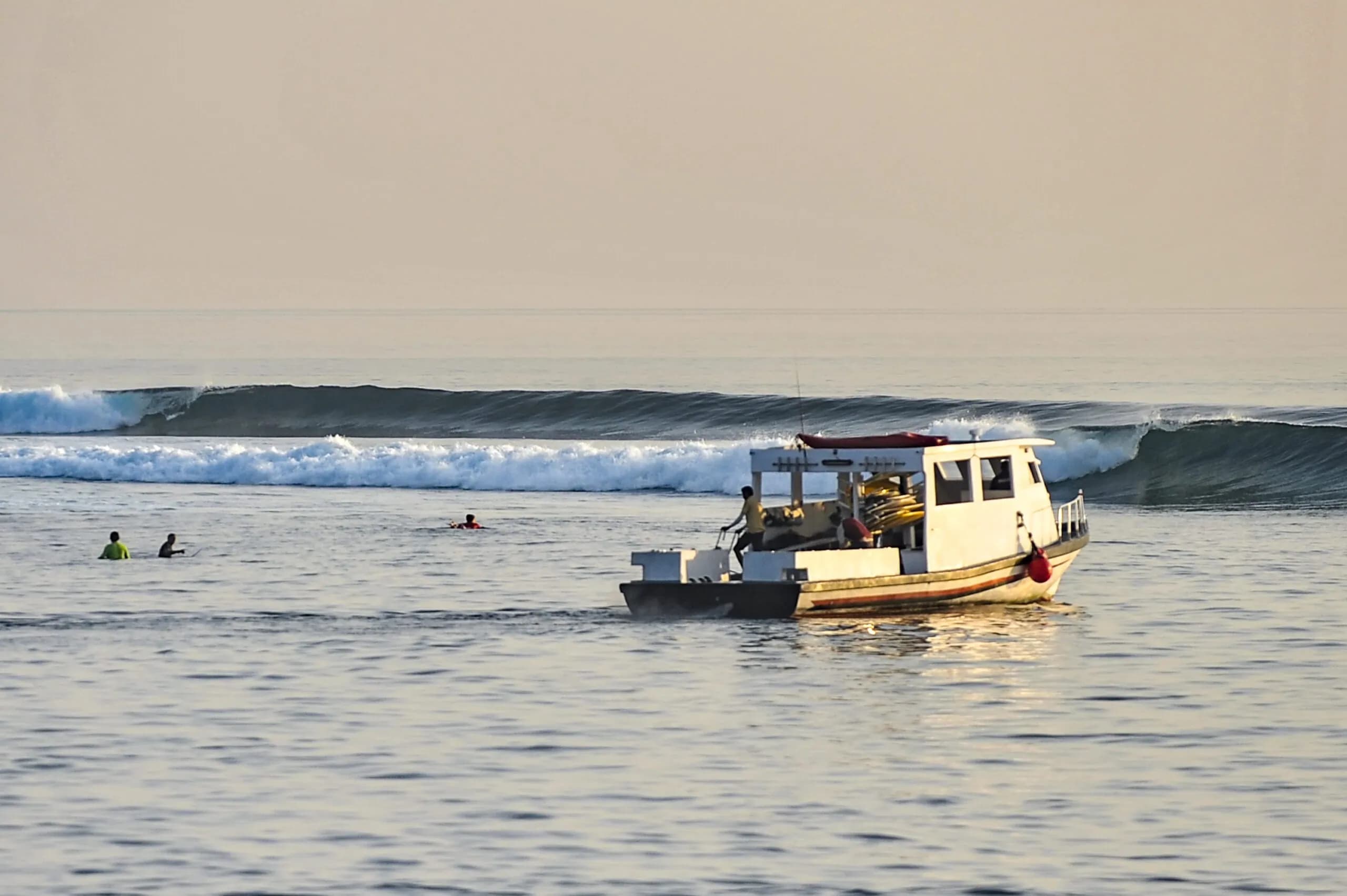
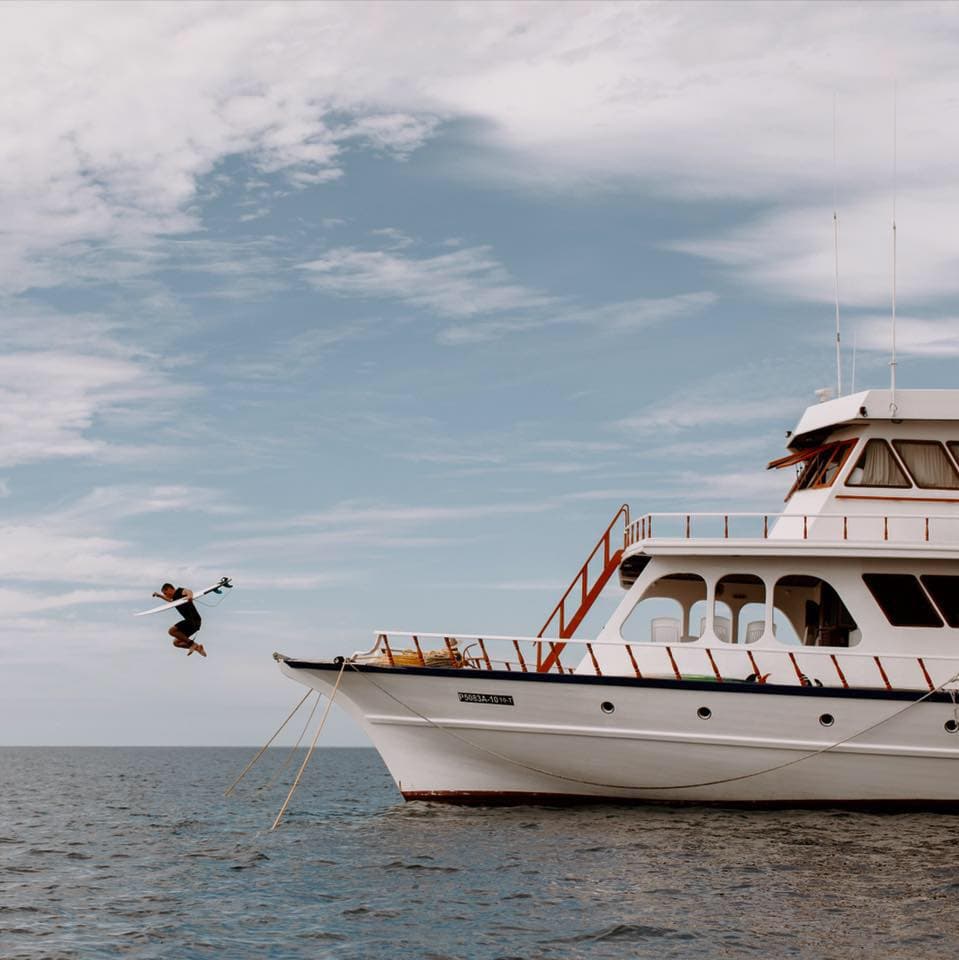
Resort surfers spend between 45 and 90 minutes per day on transfer boats to and from breaks. Over a seven-day trip, that's up to ten hours of your finite surf time spent in transit. On Maavahi, the first paddle-out happens before the second coffee. You wake up anchored at the break.
Sultans, Chickens, Cokes — earned their reputation honestly, and they're worth surfing. But fame attracts boats, and some mornings the channel starts to fill up. It's part of the reality of a destination that the whole world has discovered.
We work two ways around this. The first is flexibility — if we see the lineup getting busy, we move. There are always other options receiving the same swell, usually empty. The second is cooperation — we stay in contact with the other charter captains and try to coordinate rotations, spreading the boats across different breaks rather than stacking everyone on the same peak. It's not a formal system, but it works, and it's part of how we think about our responsibility as surf charter operators in these waters.
And sometimes the best answer is to simply go somewhere nobody else is going. A day's extra navigation to reach a pass that doesn't appear on any charter itinerary can be worth the whole trip. That requires a certain state of mind — open to discovery, comfortable with uncertainty, willing to trade the guaranteed for the extraordinary. If that sounds like your kind of trip, we should talk.
From the Helm
We're always in the hands of Neptune. We plan carefully, we read the forecast, we move when we need to. And then the ocean decides. That's the deal — and it's what makes it worth doing.
GEAR?
We got you covered
SURF TRIP PLANNER
FORGOT SOMETHING?
Essentials, board repair & premium surfboards.
TRAVEL LIGHT.
Premium surfboard rental.
Now that you've seen what surfing the Maldives has to offer, why not check availability and plan your charter with us?
PLAN YOUR SURF ADVENTURE