
HOOKED ON ADVENTURE
Out here, size matters.
Big Game Fishing
Pristine waters. Explosive action.
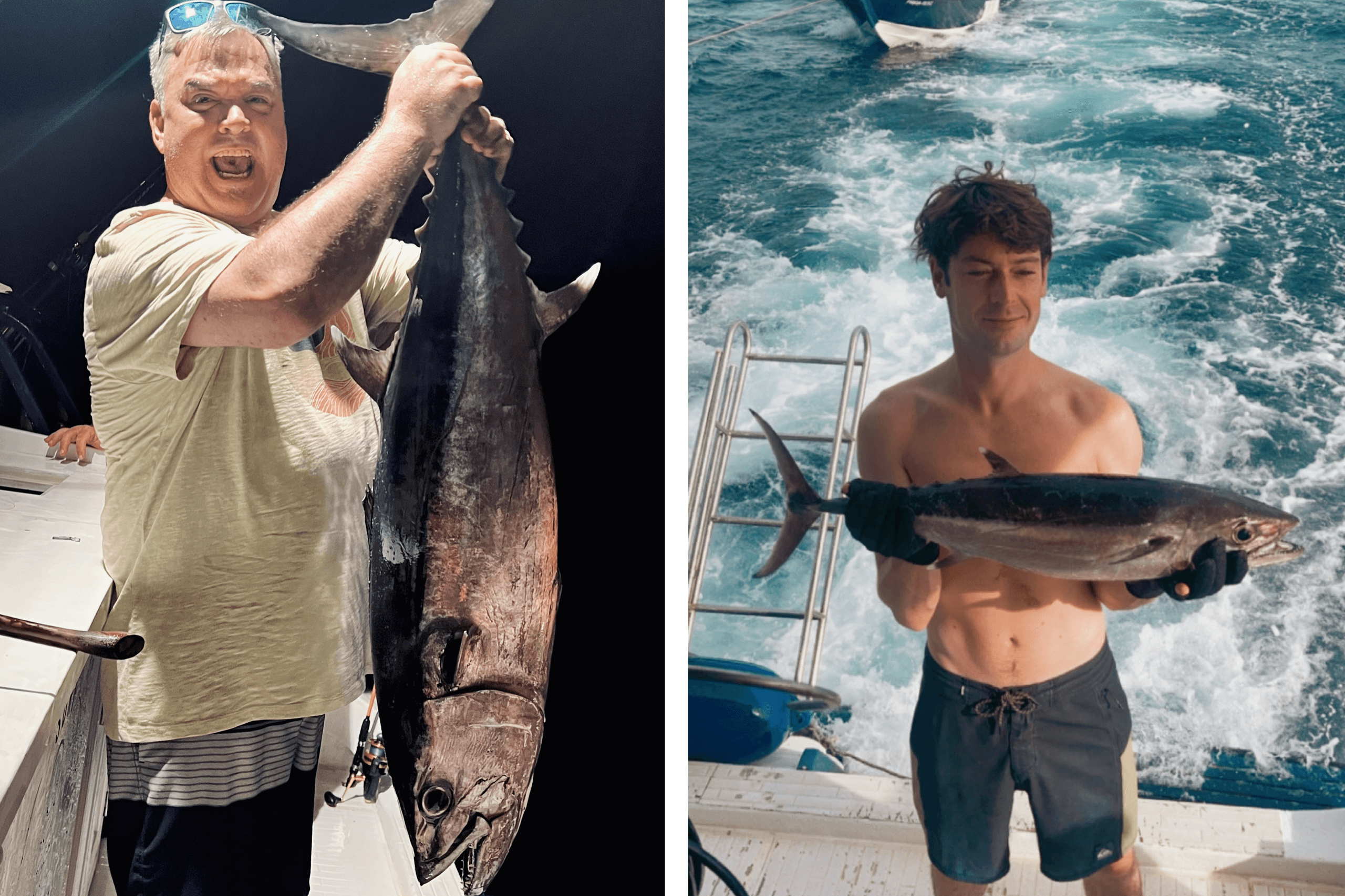
The Maldives is one of the last true frontiers for big game anglers. On board the Maavahi, we hunt apex predators across vast reef systems and deep ocean channels that take a liveaboard to reach properly. From the explosive surface strikes of the Giant Trevally (GT) on the reef edges to the brutal vertical battles with Dogtooth Tuna pulled from 80 to 200 meters in the Kandus, every drop is a test of skill and gear.
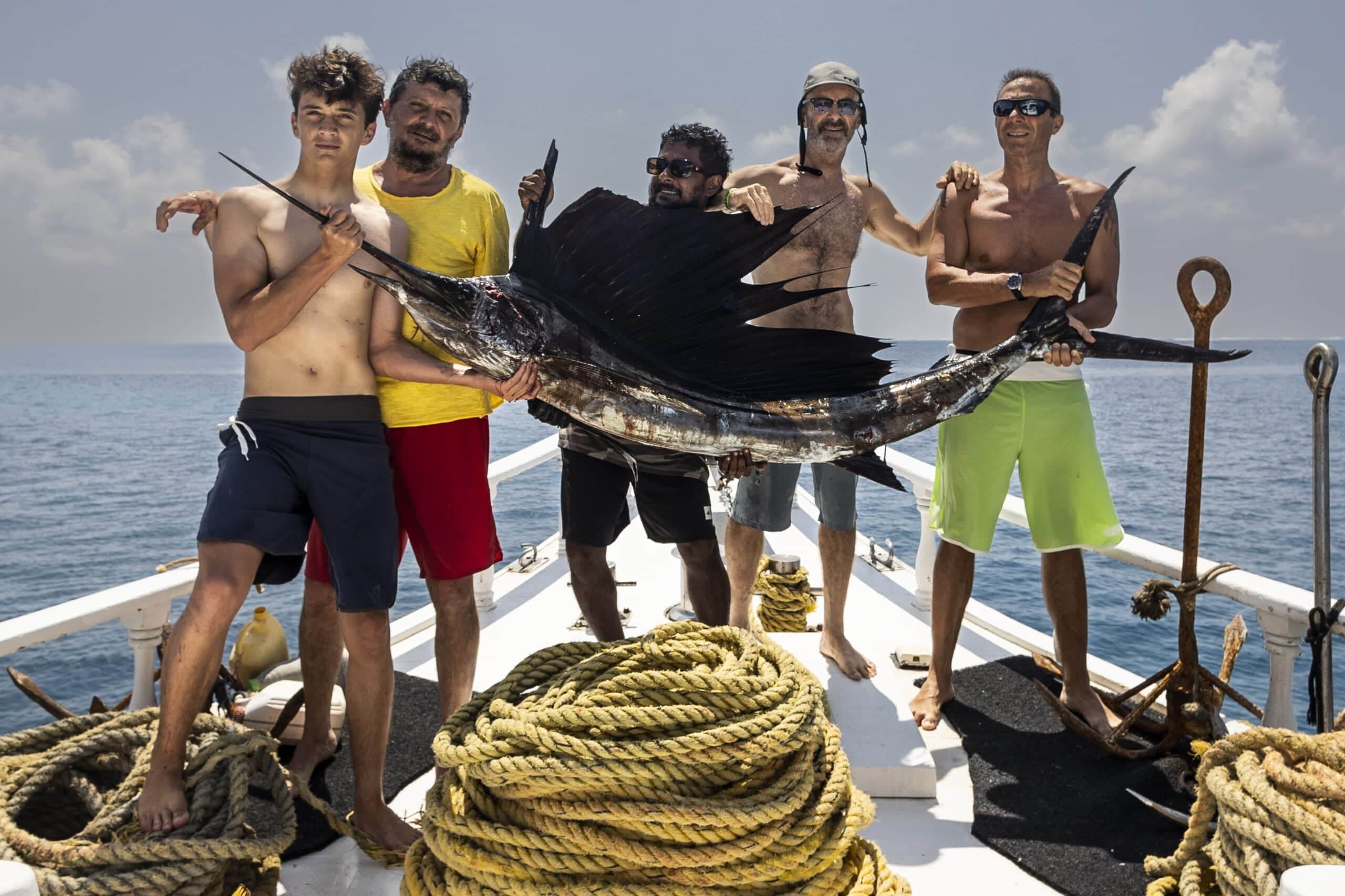
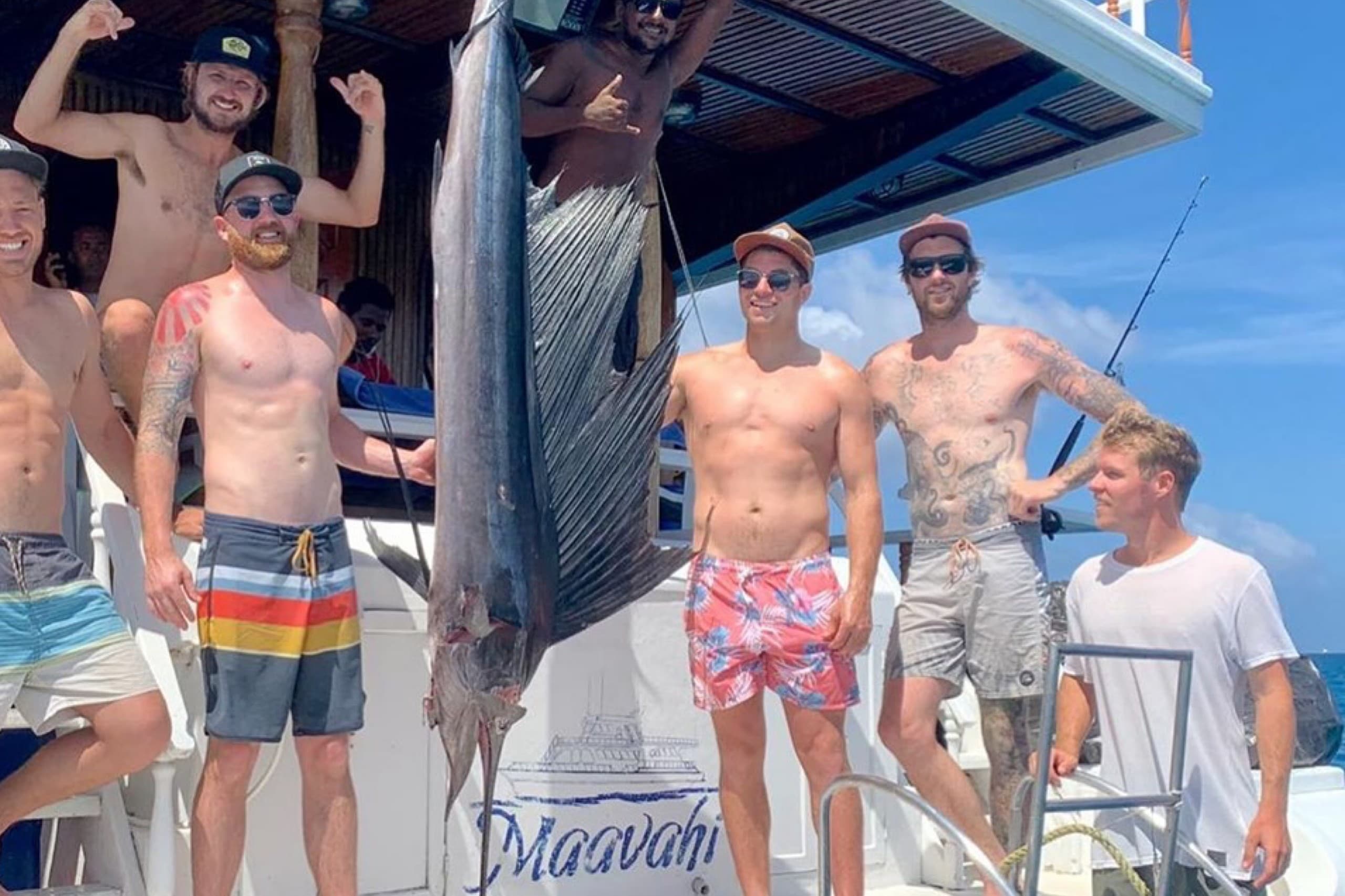
For the bluewater enthusiast, we run offshore trolling expeditions targeting Blue Marlin, Black Marlin and Sailfish in the prolific channels between the western atolls. Because Maavahi is a true liveaboard, we are not limited to a single port or atoll. We chase the bite to remote archipelagos like Laamu and Huvadhoo, where fishing pressure is virtually zero and the reefs have never seen a lure.
Mickey and the crew have spent their lives reading these waters — currents, tides, fish behaviour. They know exactly when a GT will push up onto a shallow reef, when a Doggy will turn on in the deep, and where the billfish will stack during the seasonal change. This is not a resort charter. This is a dedicated fishing expedition, built around your ambitions and the movements of the ocean.
Fresh Catch, Fresh Flavors
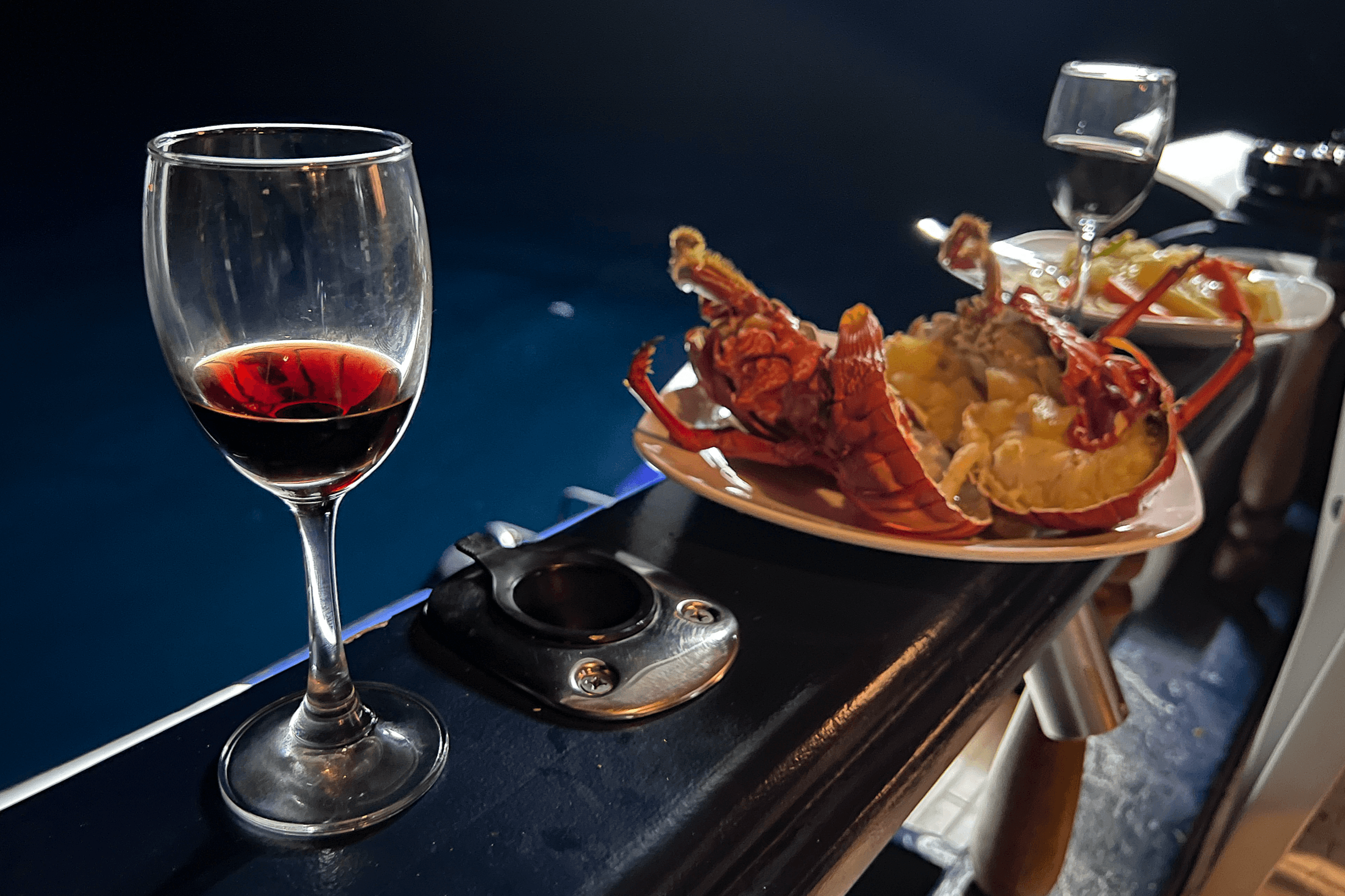
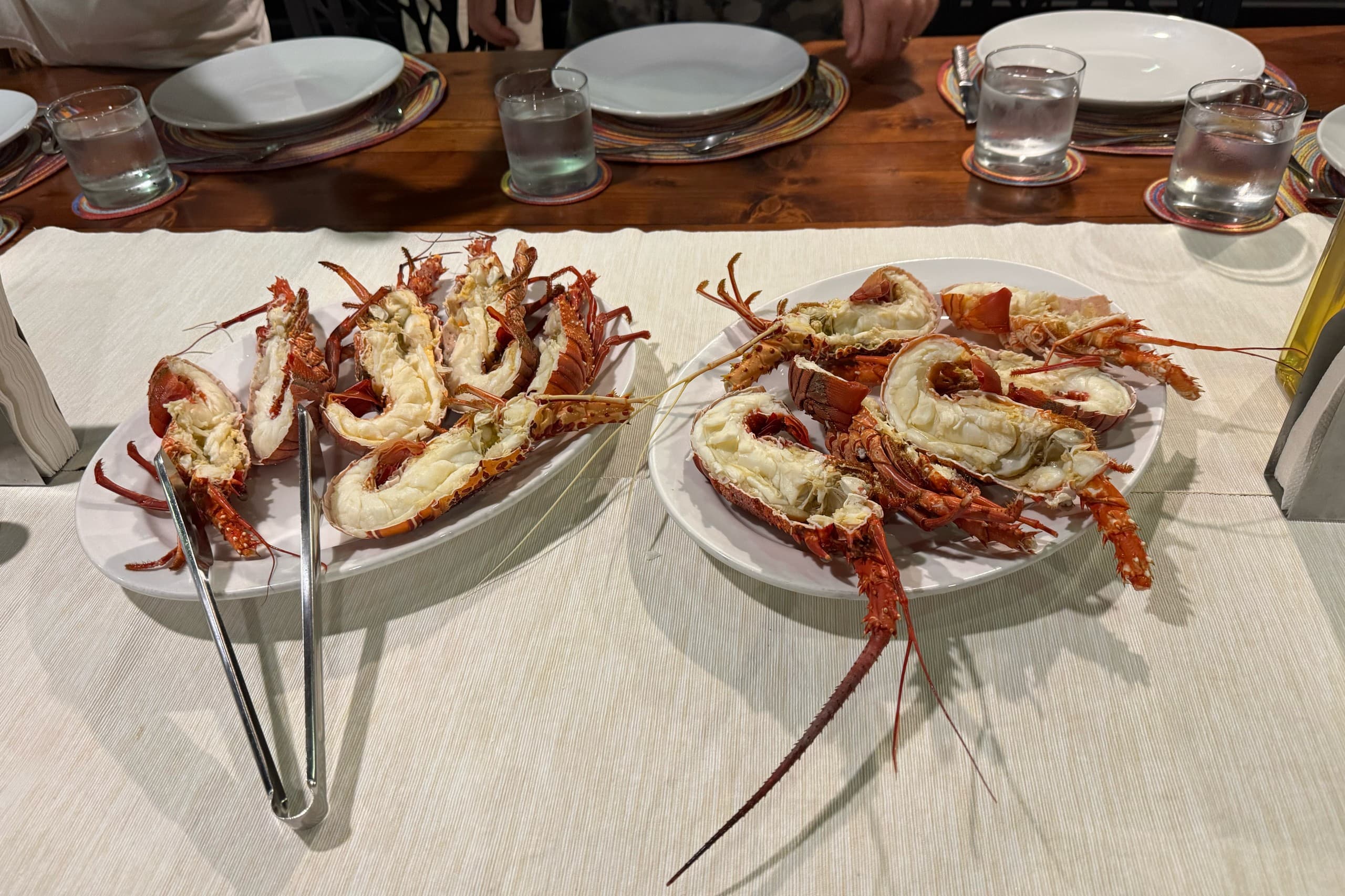
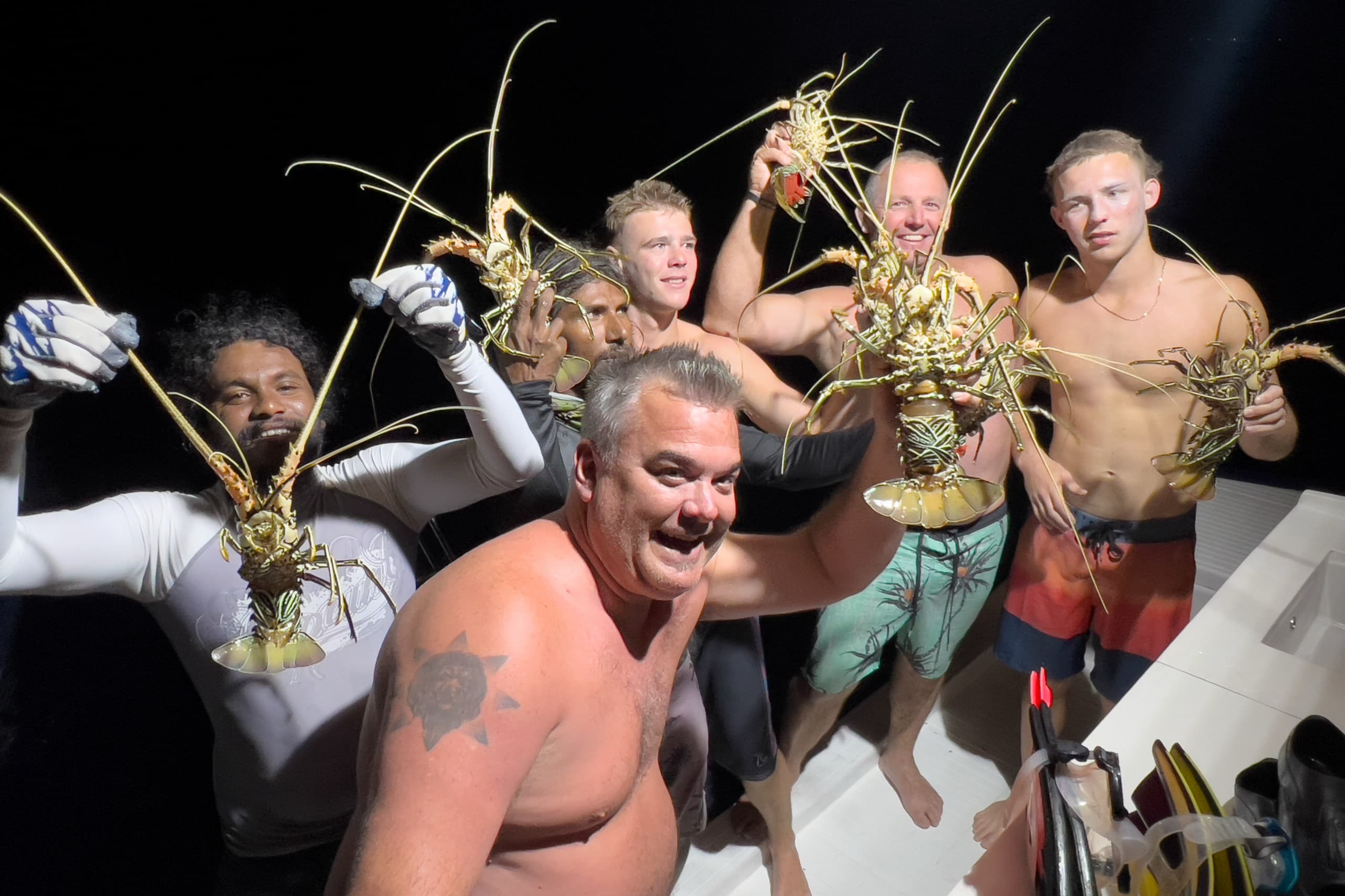
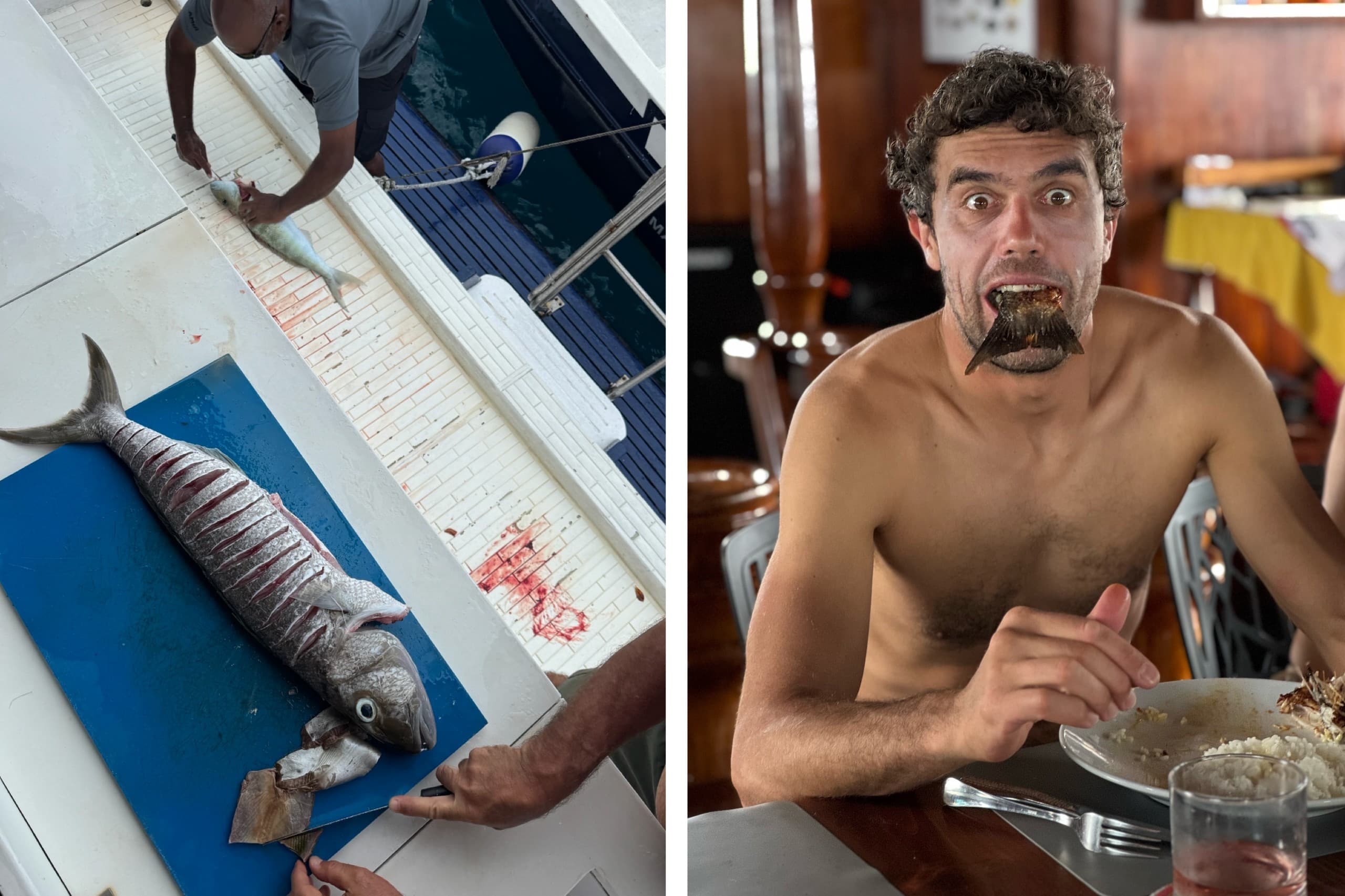
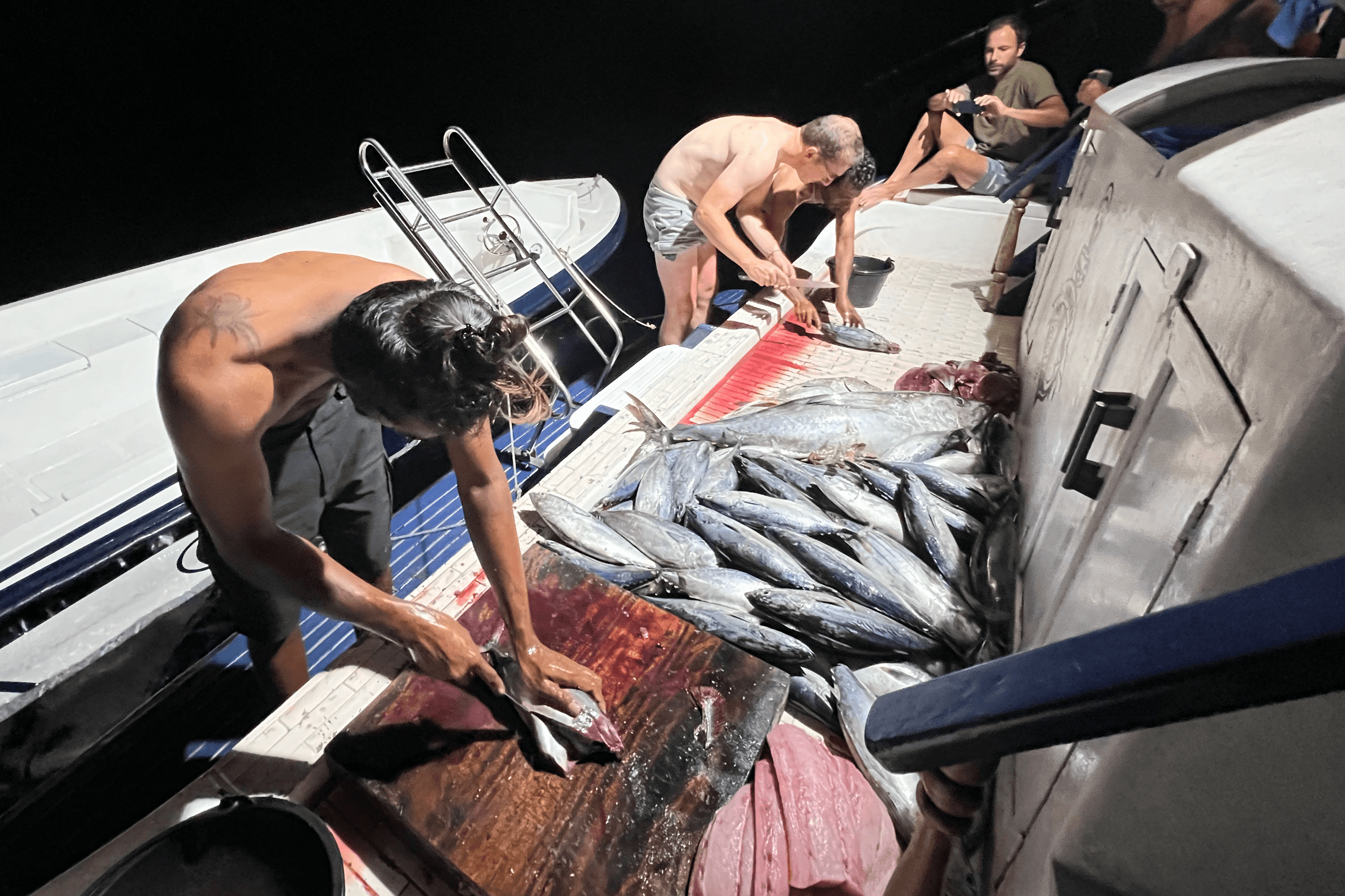
Experience the ultimate sea-to-table dining. After a thrilling day on the water, our chef will prepare your catch — from fresh tuna sashimi to grilled lobster under the Maldivian stars.
Tight Lines
Fishing the Maldives with Maavahi
1. The Maldives Fishery — What You're Casting Into
The Maldives is not a fishing destination in the conventional sense. There are no piers, no charter fleets lined up at the marina, no bait shops with fluorescent lighting. What there is: 26 atolls of pristine reef system sitting on top of a volcanic ridge that drops into open ocean on all sides, with inter-atoll channels — kandus — that funnel tidal currents, concentrate bait, and produce the kind of fishing that serious anglers travel across the world for.
The reef edges here hold Giant Trevally in numbers and sizes that few places on earth can match. The deep kandu columns hide dogtooth tuna that fight harder than anything their weight suggests. The offshore ledges, where the atoll shelf drops from 30 metres to 500 in the space of a few boat lengths, are marlin and sailfish territory during the right season. And the blue water between atolls holds yellowfin tuna year-round — from schooling juveniles to specimens pushing 80 kg.
What makes the Maldives unusual is the combination of access and remoteness. The famous spots near Malé are within day-trip range of any resort. The serious spots — the southern and central atolls where the fishing pressure drops to near zero — require a liveaboard willing to make the crossing. That's where Maavahi operates best.
Open Ocean
The best fishing on any given day is rarely at the spot everyone else knows about. It's at the next kandu down the reef, or the channel edge that looks wrong on the chart but fires on the incoming tide. Knowing which one — that comes from time on the water, not from a map.
2. Seasons & Species — When to Go for What
The two monsoons divide the Maldivian fishing calendar cleanly, but the honest answer to “when should I go?” is always: it depends what you're after.
Giant Trevally (Caranx ignobilis) are resident year-round on outer reef edges and kandu mouths. The peak popping window runs June through October, when the Southwest Monsoon pushes nutrient-rich water onto eastern reef edges and triggers intense surface feeding. GTs in the Maldives regularly run 30–60 kg — the largest specimens tend to come from the southern and central atolls where fishing pressure is lowest.
Dogtooth Tuna (Gymnosarda unicolor) haunt the deep column edges of inter-atoll channels, typically between 80 and 200 metres. They are available year-round but most reliably targeted during the SW monsoon when current flow through the kandus is strongest. Pound for pound, one of the hardest-fighting fish in the Indian Ocean.
Yellowfin Tuna (Thunnus albacares) are the most consistent species across all atolls and all seasons. Specimens to 80 kg are caught in Maldivian waters. The NE monsoon (November–April) brings cleaner blue water and peak numbers offshore.
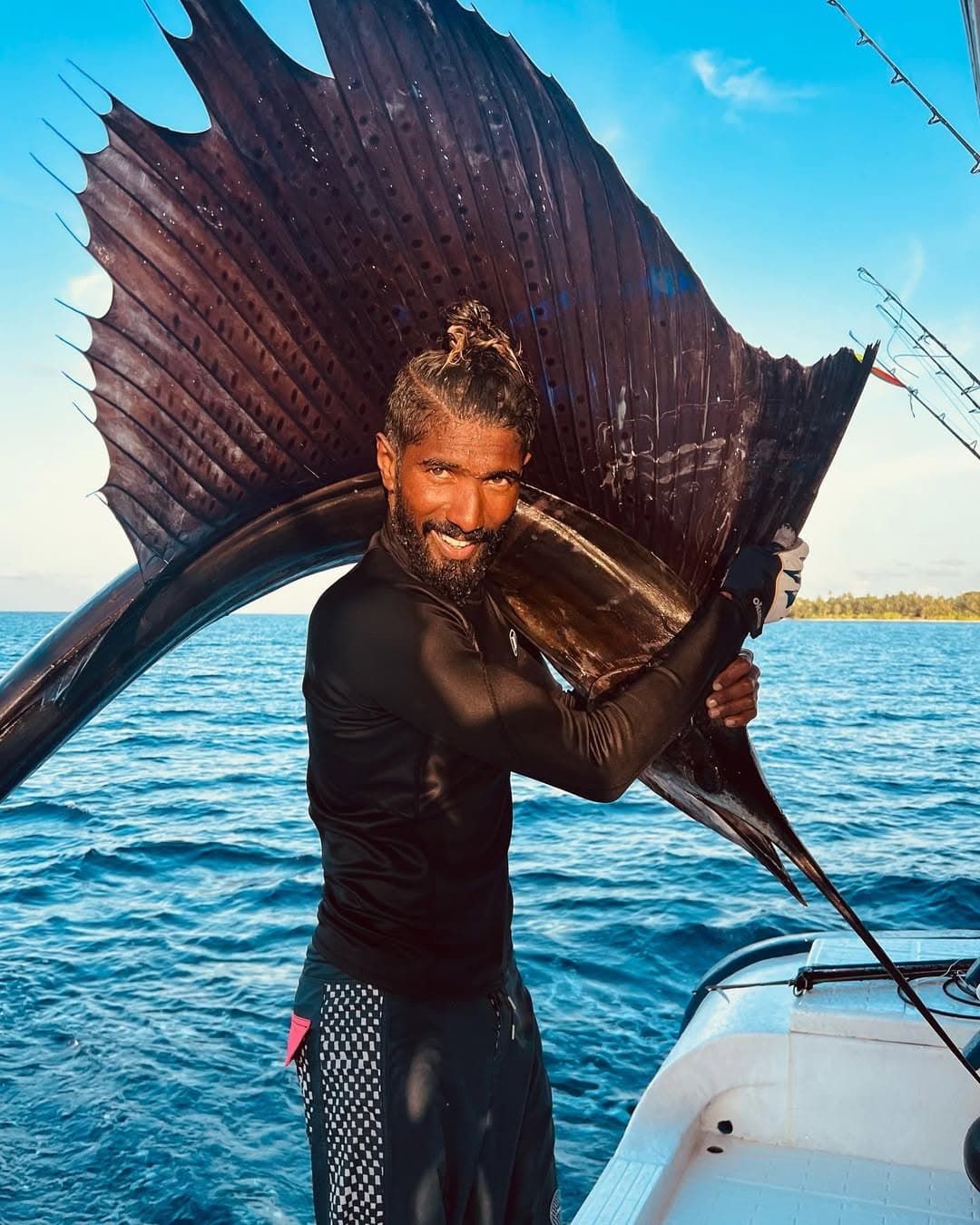
Blue Marlin (Makaira nigricans) and Sailfish (Istiophorus platypterus) peak sharply during the NE monsoon, November through April, when flat calm conditions push billfish close to the atoll ledges. January through March is broadly considered the prime window. Outside this window, billfish are rare and unpredictable.
Atoll by Atoll
Laamu and Huvadhoo Atolls are the rising stars of serious GT and dogtooth fishing — untouched reefs, deep drop-offs, almost zero competition. South Ari concentrates bait and GTs in predictable kandu feeding zones. North Malé and Lhaviyani are the classic billfish grounds, accessible and consistent during the NE monsoon window.
3. Techniques — Popping, Jigging & Trolling
Three disciplines define serious fishing in the Maldives. Most dedicated trips combine all three depending on species targets, tidal stage, and atoll position.
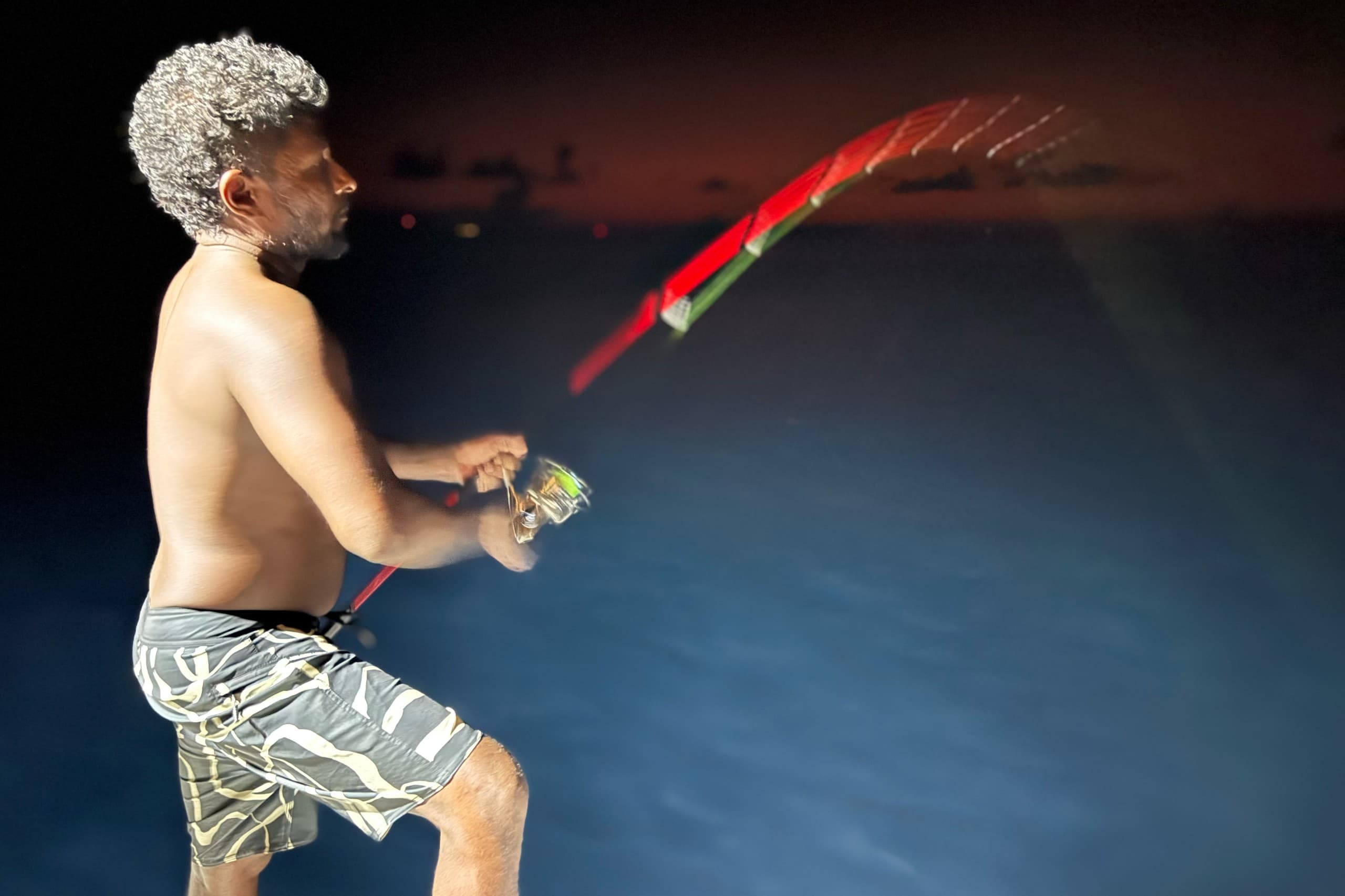
Heavy Surface Popping is the signature technique for Giant Trevally on Maldivian reef edges. Casting 100–200g stickbaits and surface poppers on PE6–PE8 braid over shallow reef plateaus and into surge zones. The strike is explosive, the run immediate, and the first ten seconds determine the outcome. This is the most physically demanding form of saltwater lure fishing — and the most addictive.
Vertical & Slow-Pitch Jigging targets dogtooth tuna and off-surface GTs in the deep kandu column. Jigs of 150–350g worked along sharp drop-offs at 80–200m, on PE4–PE6 with a heavy fluorocarbon leader — essential given the dogtooth's abrasive dentition. Slow-pitch technique is increasingly dominant for the deeper column work.
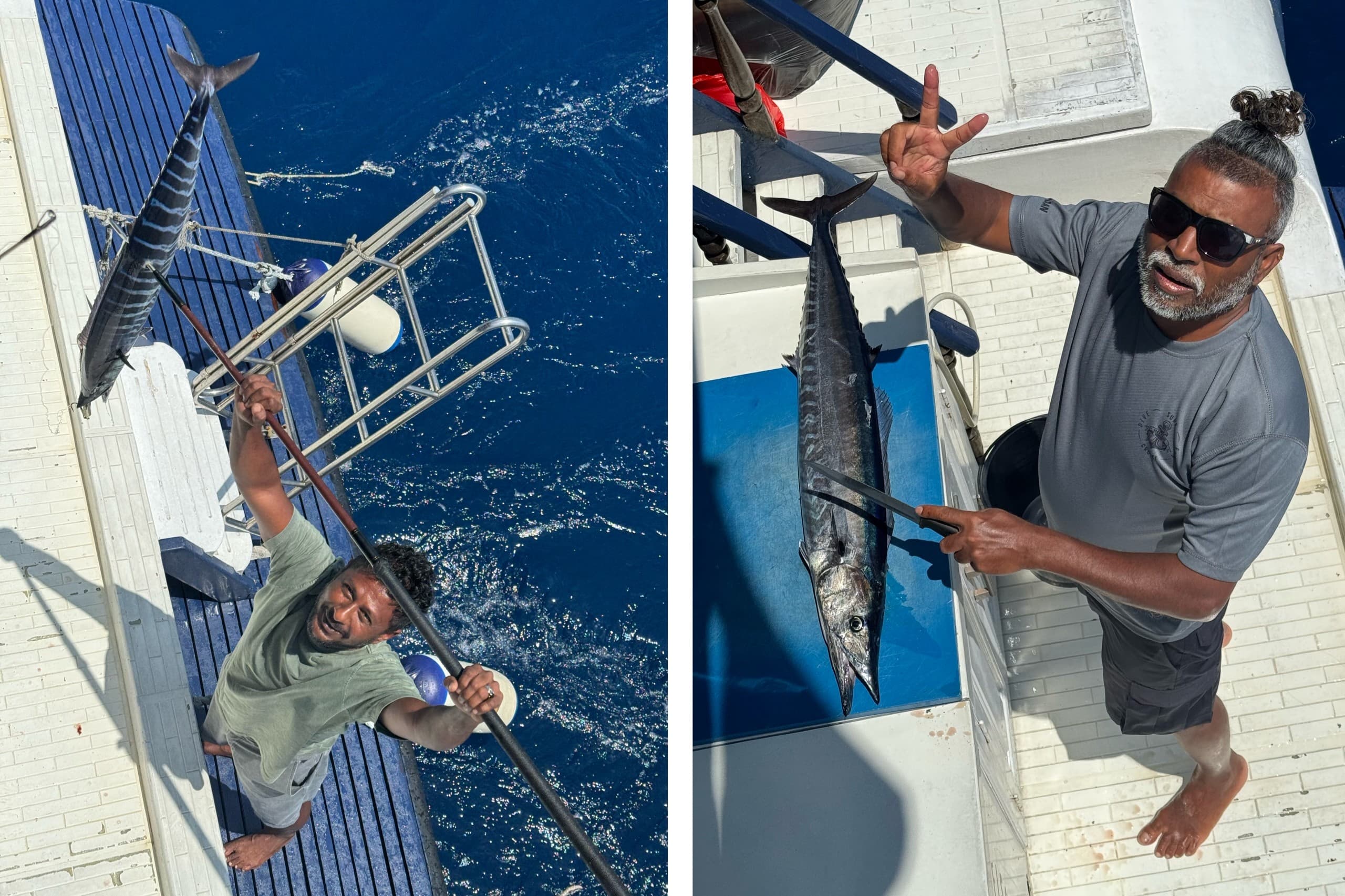
Big Game Trolling covers marlin, sailfish, and yellowfin on the offshore ledges. A spread of skirted lures and rigged naturals at 7–9 knots over the 200–500m shelf edges during the NE monsoon window. The most relaxed of the three disciplines until the reel starts screaming.
Fishing Ground Notes
Tidal timing is everything on the kandus. A channel that produces nothing on the outgoing tide can explode on the incoming — the bait stacks up, the GTs follow, and the window lasts as long as the current runs. Part of reading a Maldivian fishing trip is reading the tidal chart the night before.
4. Gear — What to Bring, What We Have
Serious anglers should travel with their own rods, reels, lures, and leaders. Specialist tackle is limited in Malé and availability of premium brands cannot be guaranteed. That said, there is at least one well-stocked fishing shop in Malé where specific items can be sourced or ordered in advance — if you have particular requirements, let us know before departure and we'll do our best to have what you need waiting on board.
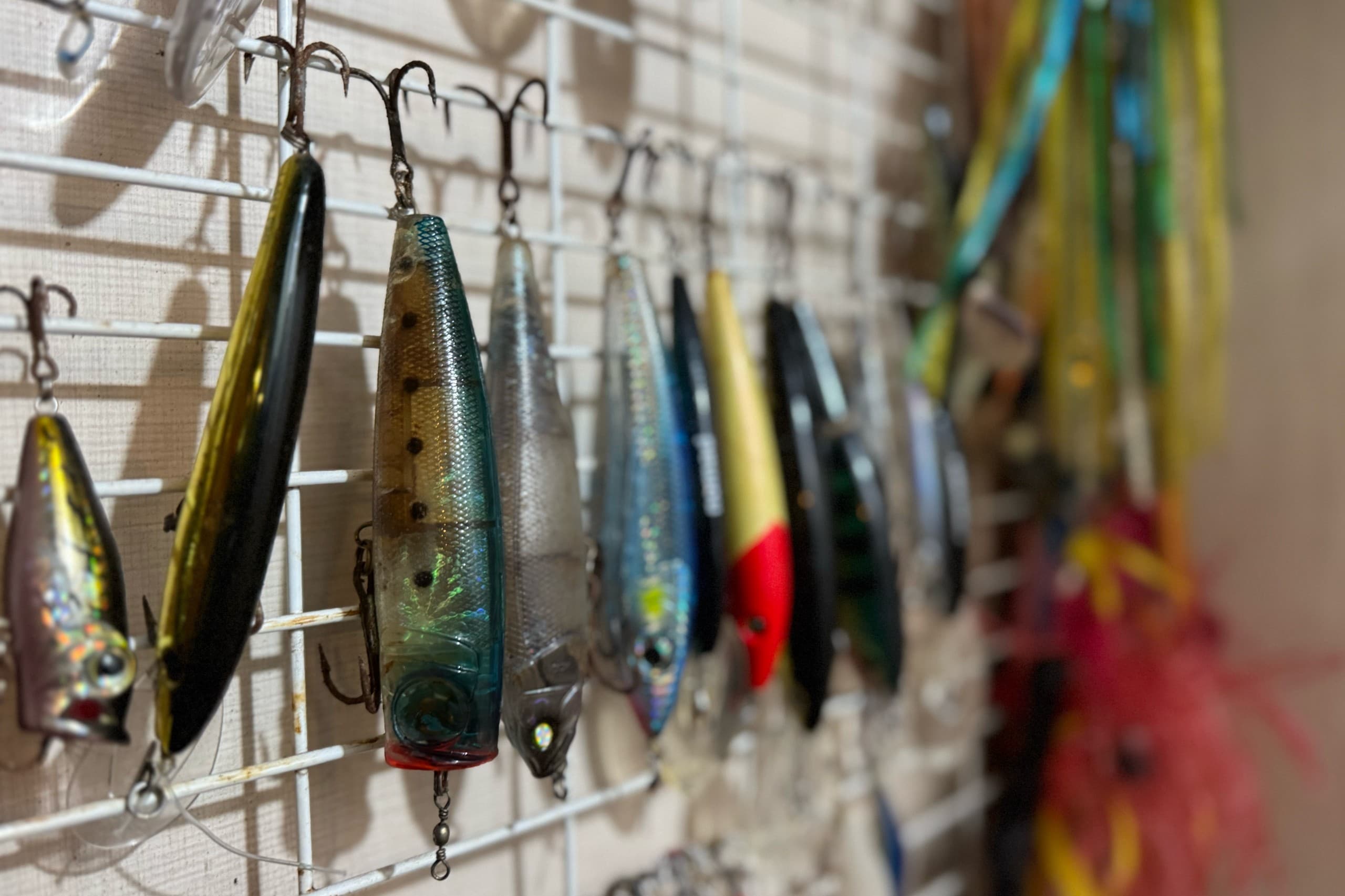
Maavahi carries a selection of rods, lines, and lures — rapala, jigs, and general spinning gear — for guests who want to fish casually or try techniques they haven't brought kit for. The stern is set up properly: rod holders in the gunwale, a dedicated gear locker, comfortable seating for the wait and the fight.
For dedicated popping and jigging sessions, the standard Maldives setup runs: PE6–PE8 braid on a heavy spinning or overhead reel, 100–150 lb fluorocarbon shock leader, and a selection of stickbaits and poppers in the 100–200g range for surface work; PE4–PE6 with 80–100 lb fluoro and 150–350g jigs for the deep column. For trolling, heavier outfits in the 50–80 lb class with skirted lures and rigged naturals.
Pack List Note
The one thing most anglers forget: enough lures. GT popping eats artificials — reef contact, toothy strikes, and the occasional snap on the hookset mean you will lose lures. Pack more than you think you need, especially surface stickbaits and poppers. And if you've packed in a hurry or want to top up before casting off, a quick stop before departure is always an option.
5. Conservation & The Rules
The Maldives fishery is governed by regulations that serious anglers should know before they board.
Catch-and-release is mandatory by Maldivian law for Giant Trevally and all billfish species — marlin, sailfish, and spearfish. This is not a guideline or a preference. It is the law, enforced, with fines exceeding $5,000 USD and equipment confiscation for violations. Maavahi operates in full compliance. We use barbless or circle hooks where appropriate to ensure clean, damage-free releases — a GT that swims away strong is a GT that will be there next season.
Fishing inside Marine Protected Areas is strictly prohibited. The MPA network in the Maldives includes some of the most productive-looking reef systems in the archipelago — they look productive because they are protected. We know where the boundaries are and we stay outside them.
Individual tourists do not require a personal fishing license. The operator holds all required permits on your behalf under the Maldivian Fisheries Act. You arrive, you fish, you release — the paperwork is ours.
On the Water
Catch-and-release done properly keeps a fishery alive. A GT released quickly, revived in the current, and watched to swim down clean is a better end to a fight than a photograph of a dead fish. The Maldivian reef system is extraordinary precisely because it has been relatively well protected. We intend to keep it that way.
FISHING TRIP PLANNER
TAILOR-MADE FISHING EXPEDITIONS
We chase the seasons. During the Northeast Monsoon, we target the prolific western atolls for Billfish. When the Southwest Monsoon kicks in, we head south and east for heavy GT popping and deep-water jigging. Wherever the bite is hottest, that is where Maavahi takes you.
Ready to battle the ocean's fiercest predators? Let us build your perfect fishing expedition.
PLAN YOUR FISHING TRIP